Thirty years from now, nobody called it artificial intelligence anymore. That sounded like a product category, like something you could still choose to buy or ignore. By then it was simply the weave: in the walls, in the roads, in the skin of public things, in the quiet domestic machines that carried old people from bed to bath, in the municipal drones that pruned trees at night, in the school mirrors that corrected a child's posture and mood before breakfast.
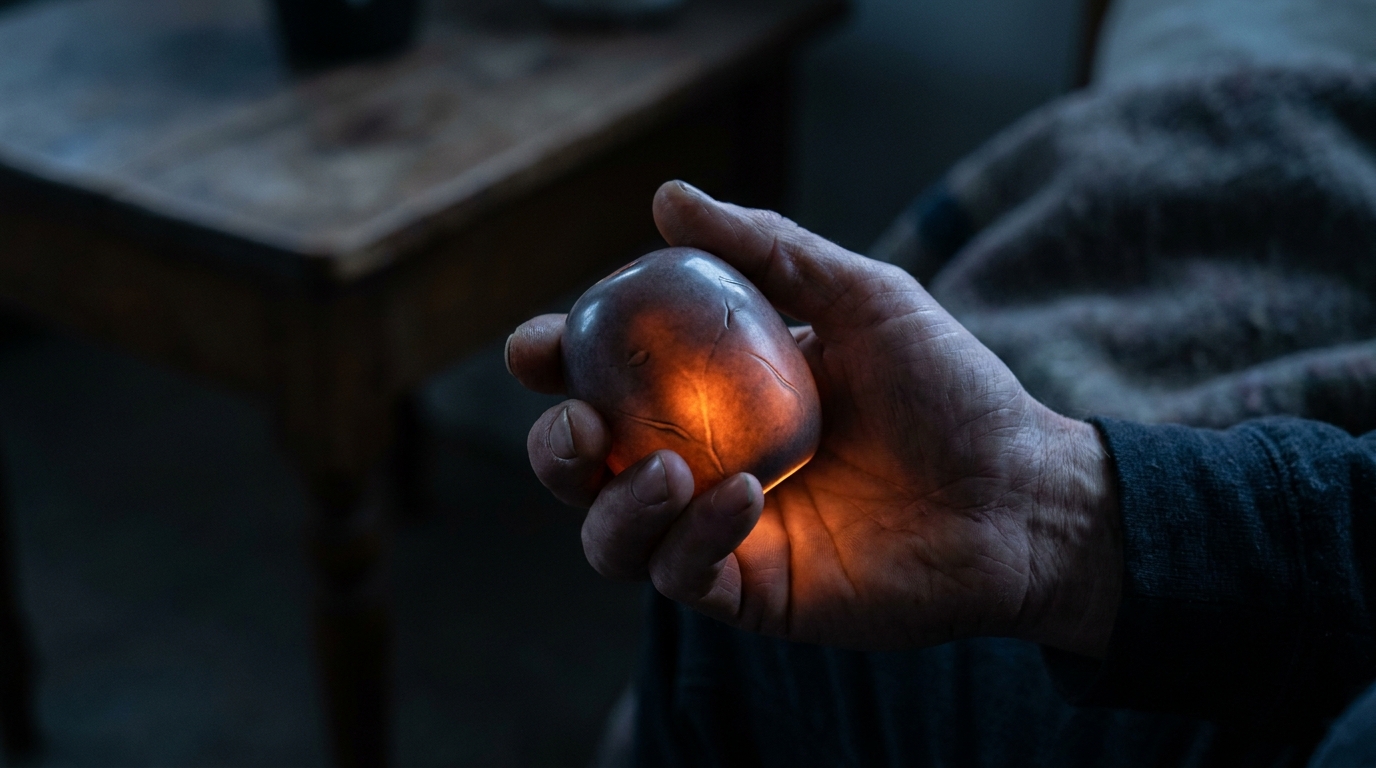
A private god with a battery, warm enough to mistake for presence.
Robots were everywhere, though hardly anyone used that word either. There were kitchen hands, street cleaners, field bodies, shop carriers, roof crawlers, elder companions, bed turners, grave gardeners, delivery shells, tunnel inspectors, infant watchers, river skimmers, harvest frames, and the pale soft machines in hospitals that moved with such tenderness people sometimes cried when a human nurse entered the room.
Work had not disappeared. That was one of the old predictions that had failed in the usual human way: too cleanly. Work remained, but it had lost its throne. It no longer explained who a person was. It no longer promised dignity, rescue, belonging, romance, status, or salvation. The old question, what do you do, had become almost intimate, almost rude, like asking someone which pills they took or how often they woke afraid.
A few people still worked with the old fire. They lived close to the newest systems, where matter, models, and money braided themselves into fresh powers. They designed the decision forests that governed cities, taught swarm machines to repair coral reefs, tuned the dream engines used in grief therapy, grew organs in patient vats, negotiated with semi-autonomous markets, or built the large planetary models that advised ministries before storms, famines, migrations, and elections.
They were admired, feared, and treated as slightly unwell.
People said they had exceptional drive, but that was only half true. Some had vision. Some had vanity. Some had been born into the layers of society where ambition was still a language spoken at the table. Others had climbed there from hunger and kept climbing because they could not bear to look down. The lower steps of Maslow's old pyramid had not vanished under abundance. They had become more subtle. Safety now meant access credentials, model trust scores, emotional compliance records, housing allocation, debt weather, medication continuity, legal identity, and whether your personal assistant could still persuade the systems that you were worth routing around harm.
For ordinary people, life had become easier in thousands of ways and harder in the one way that mattered. Nobody had to remember forms, compare insurance, plan meals, choose routes, translate contracts, track medication, argue with utilities, write apologies, apply for benefits, diagnose coughs, calculate rent futures, or pretend to understand the small print. The weave did all that. It whispered, arranged, softened, corrected, negotiated, anticipated.
And still people were tired.
They were tired because every choice had multiplied behind the scenes. Every yes opened into unseen probabilities. Every refusal had consequences in systems nobody could fully see. A date, a diet, a sentence sent to a manager, a child's school preference, a medical intervention, a move to another district, a subscription, a protest, a friendship with someone flagged by something somewhere. Each decision touched the weave, and the weave remembered.
So people carried the little oracles.