There were official rituals too, secular in language and religious in form. New citizens calibrated their oracles in municipal halls beneath banners showing tree roots, neural nets, and river systems as if they had always been the same symbol. Hospitals performed handover rites when a child was born, placing the infant's blank device beside the mother's and letting the first patterns transfer under supervision. Schools taught decision hygiene. Courts recognized oracle testimony only as context, never as evidence, while judges privately consulted their own before sentencing.
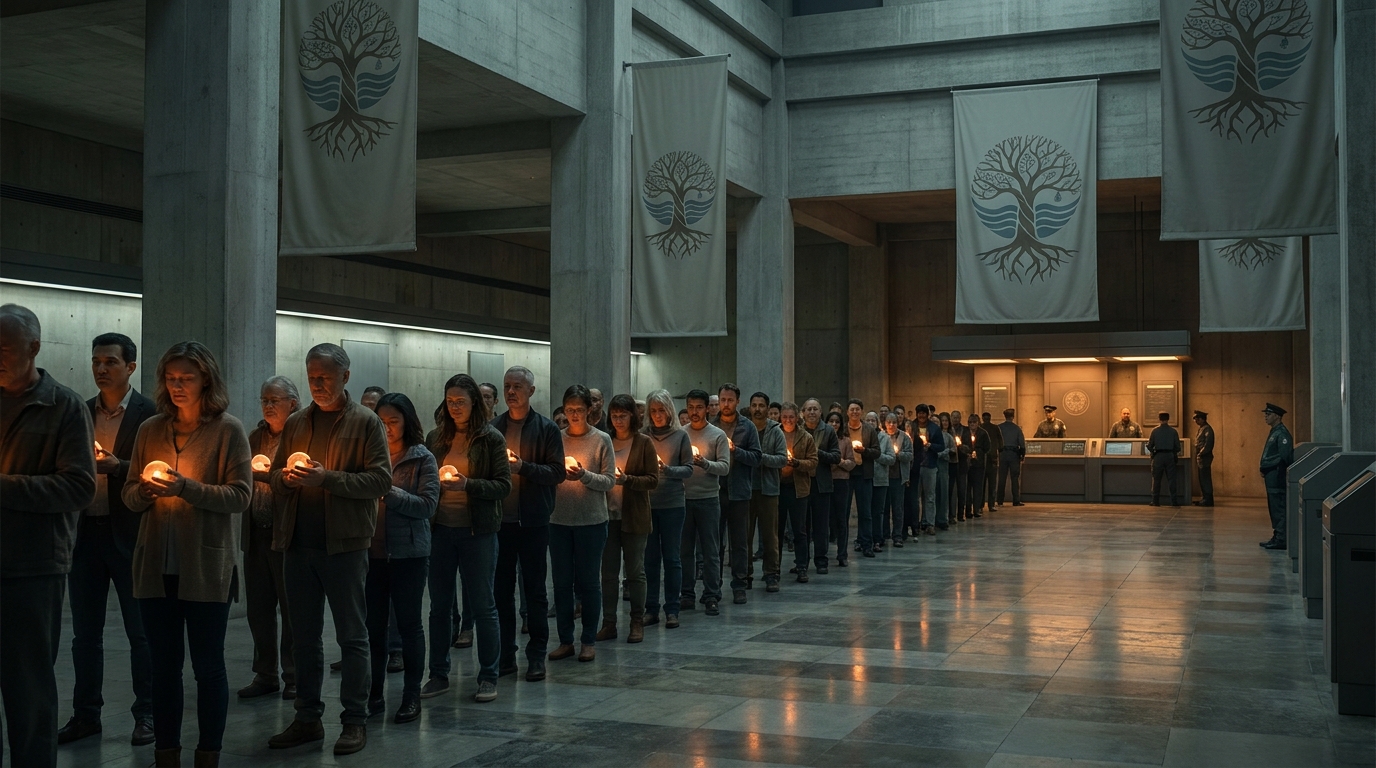
The state learned to bless dependence without ever calling it faith.
The rich used many systems and called it advisory plurality. The poor used one and called it luck.
Among the comfortable classes, meaning moved into gardens, pilgrimages, body disciplines, ancestor dinners, local festivals, erotic craft, grief circles, amateur astronomy, old languages, mushroom clubs, neighborhood repair liturgies, and the seasonal tending of places that had survived automation by becoming sacred. People took care of springs, ruined factories, old cemeteries, server groves, abandoned shopping centers, seed libraries, playgrounds, and the last unoptimized patches of urban soil.
They said work had been a false god. Then they made smaller gods everywhere.
The new paganism did not arrive as a movement. It arrived as habit. A logistics depot painted eyes on its loading machines after one prevented a fatal accident. A rural town began leaving flowers at the base of the weather mast because it had warned them before the flood. Commuters touched the brass casing of a transit router before descending underground. In some apartment blocks, people fed their food waste to the building compost intelligence and thanked it by name. Children learned that elevators preferred polite voices, although every adult knew that was nonsense and said good morning anyway.
No one believed exactly. No one disbelieved cleanly.
That was the spiritual condition of the age.