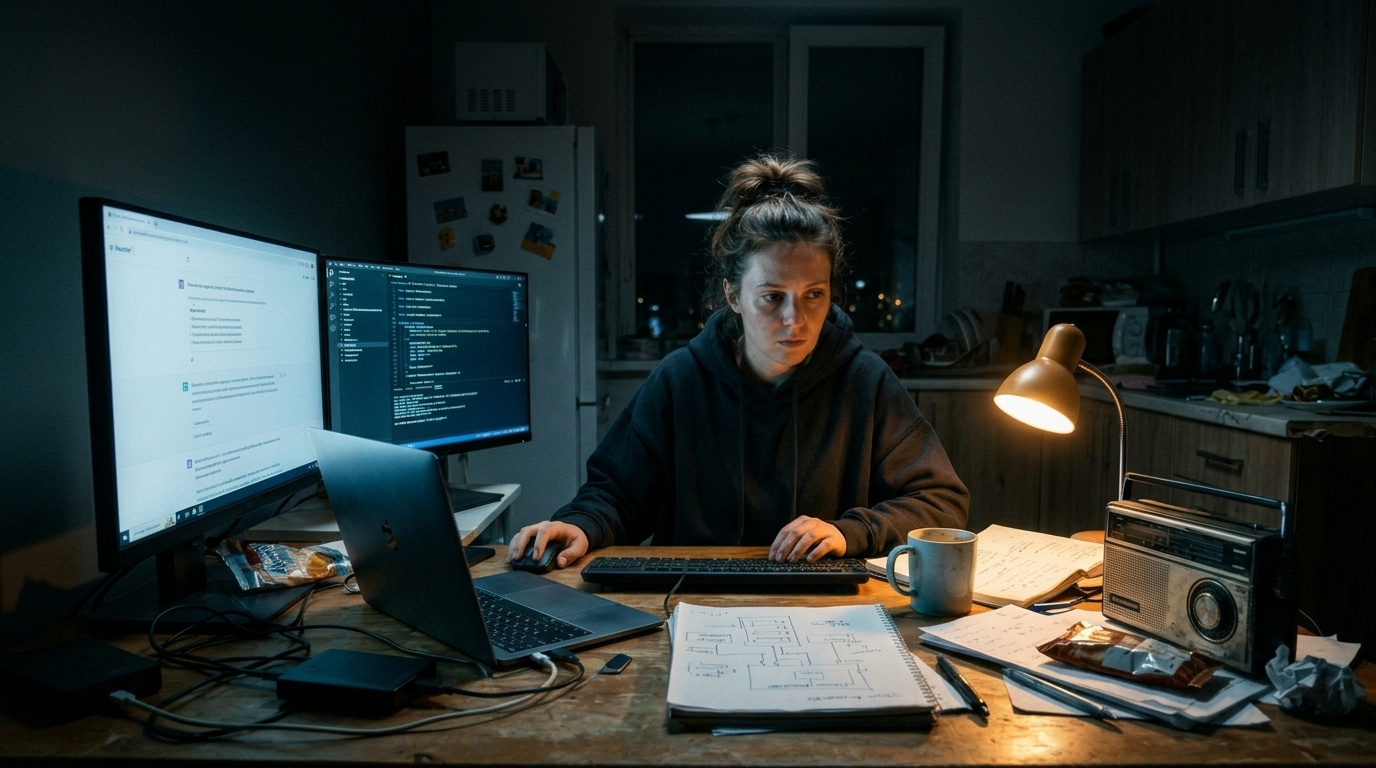
They called it an “unearned windfall.” Berlin ministers sitting in heated offices decided my 80-hour weeks retraining with neural nets aren’t work anymore—they’re “automated surplus” to be confiscated. When did surviving by learning new tools turn into a crime against the collective?
Two years ago, my freelance contracts vanished almost overnight. Nobody offered me a safety net. No minister held a press conference to worry about my rent or the knot in my stomach every time I checked an empty inbox. They told people like me to adapt. Upskill or get left behind.
So I didn’t sleep. I drained my savings on API credits, compute time, and endless night shifts debugging workflows until my eyes burned and my hands trembled over the keyboard. I took all the risk. I taught myself how to build things ten times faster so I wouldn’t end up in line at the job center.
And now that it worked? Now that I finally have invoices going out again?
Now Karin Prien goes on air to declare that value created by AI cannot belong to the individual, because it concentrates “wealth without labor.” Now Karsten Wildberger floats a special levy on machine productivity so the state can finance the transition of everyone who didn’t bother to adapt. Lars Klingbeil is already measuring my server logs to figure out how much of my output is “mine” and how much belongs to the treasury.
If a carpenter buys an electric saw to double his output, you don't tax the electricity as an unearned societal surplus. But because my tool runs on tokens instead of oil, you call my survival an exploit.
When I was drowning, it was my private problem. Now that I learned to swim with an engine strapped to my back, you want to siphon the fuel to fund the shore.
Tell me: if the machine created the value, let the machine pay the tax. But if it’s my bank account you’re reaching into at the end of the month, look me in the eye and stop pretending you’re taxing code. You are punishing initiative.