The war is over, and they still want my money. My wife has barely finished reading the news when I tell her to stop. I have heard enough explanations from men who never have to ask me whether I can spare it.
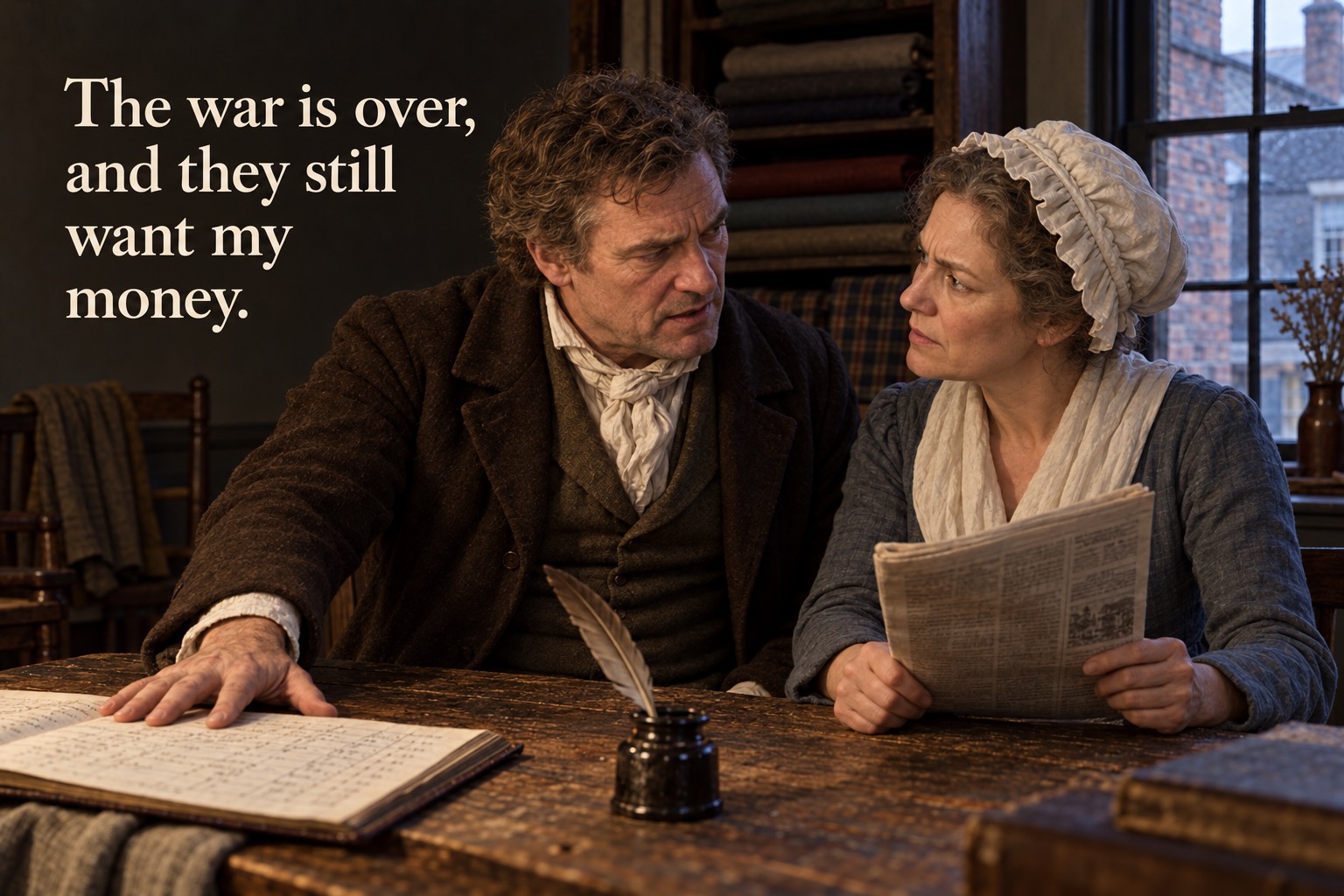
Thomas and his wife read the news and review their accounts.
It is 1816. The government wants to keep the income tax to pay its war debts. I push my account book away. “They borrowed it,” I say. “When did they ask us?”
My wife puts the paper down. She has spent the morning trying to make our figures come out differently. There is no point snapping at her. She wants the same money left in our hands that I do.
When the tax began in 1799, my brother was at sea fighting the French. I wanted his ship supplied and him home alive. I remember explaining the government's need for money to my wife, after cursing the demand all afternoon. But they were going to collect it whether I agreed or not. I had a cloth shop to keep open and could not afford trouble over refusing.
Finding the money meant changing something we had meant to do. We put off taking larger premises. My wife kept doing work we had hoped to pay someone else to do. When we talked about making a change, the conversation ended with the war. Wait until it is over. See what we have then. Now I am being told there is another reason to wait.
Yesterday a customer told me we all had to do our part. I asked how long that meant. “Until the debts are paid,” he said, as though I had asked him to settle my own accounts. I stood behind my counter with his cloth in my hands, suddenly having to defend myself for wanting to keep what I earned.
I pull the book back and turn through the old pages. There are sums here I remember arguing over, purchases we decided against, money we managed to leave untouched until something else took it. I want one of the men asking for more to sit at this table while we do that. Let him tell my wife which of her plans must go.
“They’ll take it if Parliament lets them,” she says. That is what I cannot get past. I can be as angry as I please in this room. Tomorrow I will still have to open the shop, carry the cloth downstairs, and earn whatever they decide I owe.
When a petition against keeping the tax comes around, I sign it. I press so hard that my name shows through the paper. At least this time there is somewhere to put my refusal.
In March, my wife comes into the shop with news that the Commons has rejected its continuation. I make her show me the report. “So they aren’t keeping it?”
“No.” She hands me the paper. I read it myself. Then I read it again. She starts telling me what we could do with the money. For once, I let her finish before reaching for the accounts.
Have you ever paid a tax you opposed because you could not afford the consequences of refusing?