They have found a way to take my earnings and call me generous. My business partner wants our firm's name beneath a letter welcoming the new war taxes. When I reach for the pen to cross it out, he pins the paper to the desk.
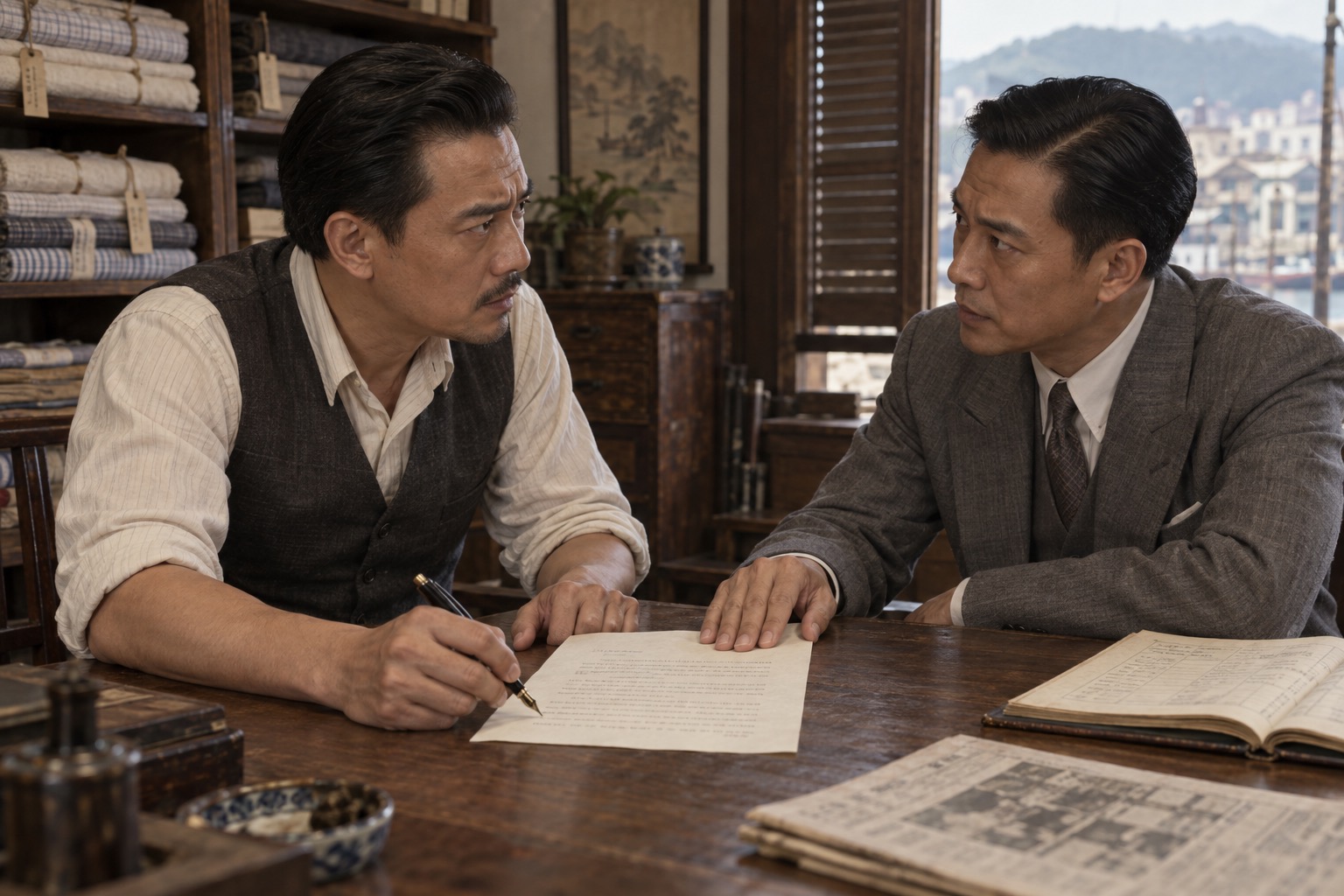
A pen above the letter, a hand holding it in place. Click the image to view it full size.
“Think about who will read it,” he says. One of our largest buyers is collecting signatures. We are supposed to bring ours to dinner tonight.
It is March 1940, in Hong Kong. We sell cloth. Ten years ago, we carried the bundles ourselves. Now there are men downstairs loading an order I spent three weeks persuading that buyer to place.
My partner taps the newspaper beside the letter. The Financial Secretary has called the colony's contribution to Britain's war against Germany voluntary. The new taxes will pay for it.
“Then let me refuse.” He looks at the open door and lowers his voice. “The colony is volunteering. That doesn't mean each of us gets to choose.”
I pull the letter toward me. His hand stays on it. We have argued over prices, credit, whether a customer would pay. Until today, I have never had to fight him for the right to say what I mean.
“We got the tax changed,” he says. “Would you rather they had gone ahead with the first proposal?”
I wouldn't. Men who objected have made the government retreat from its plan for a general income tax. The replacement leaves income from outside Hong Kong alone. Our profits here will still be taxed. My partner wants me to celebrate the boundary they have conceded and stop arguing about what remains inside it.
“I want you to cross out our name.”
He takes his hand away, but keeps looking at me. “Britain is fighting Germany. I want us to help pay for it. And I don't want that buyer wondering whether we're the sort of men who leave everyone else to carry the expense.”
I know he means it. He would send money without being made to. That is what makes me angriest: he understands wanting to give, but will not let me want to keep.
“Write your own name. Say what you believe. You cannot put mine underneath it.”
He tells me the tax will come out of the business whether I sign or not. I know. I will have to find the money. Now he wants me to help write the thank-you letter.
I draw a line through the firm's name. He watches until I have finished, then folds the invitation into his pocket. “I'll go alone tonight.”
I nearly ask him what he will tell our buyer. Instead, I turn the sheet over and push the blank side toward him. There is plenty of room for his signature.
When have you been expected to sound grateful for something you were given no choice about?