The Last Responsible Person
Fiction.
THE NUMBER
At 1:42 a.m., Clara found the number.
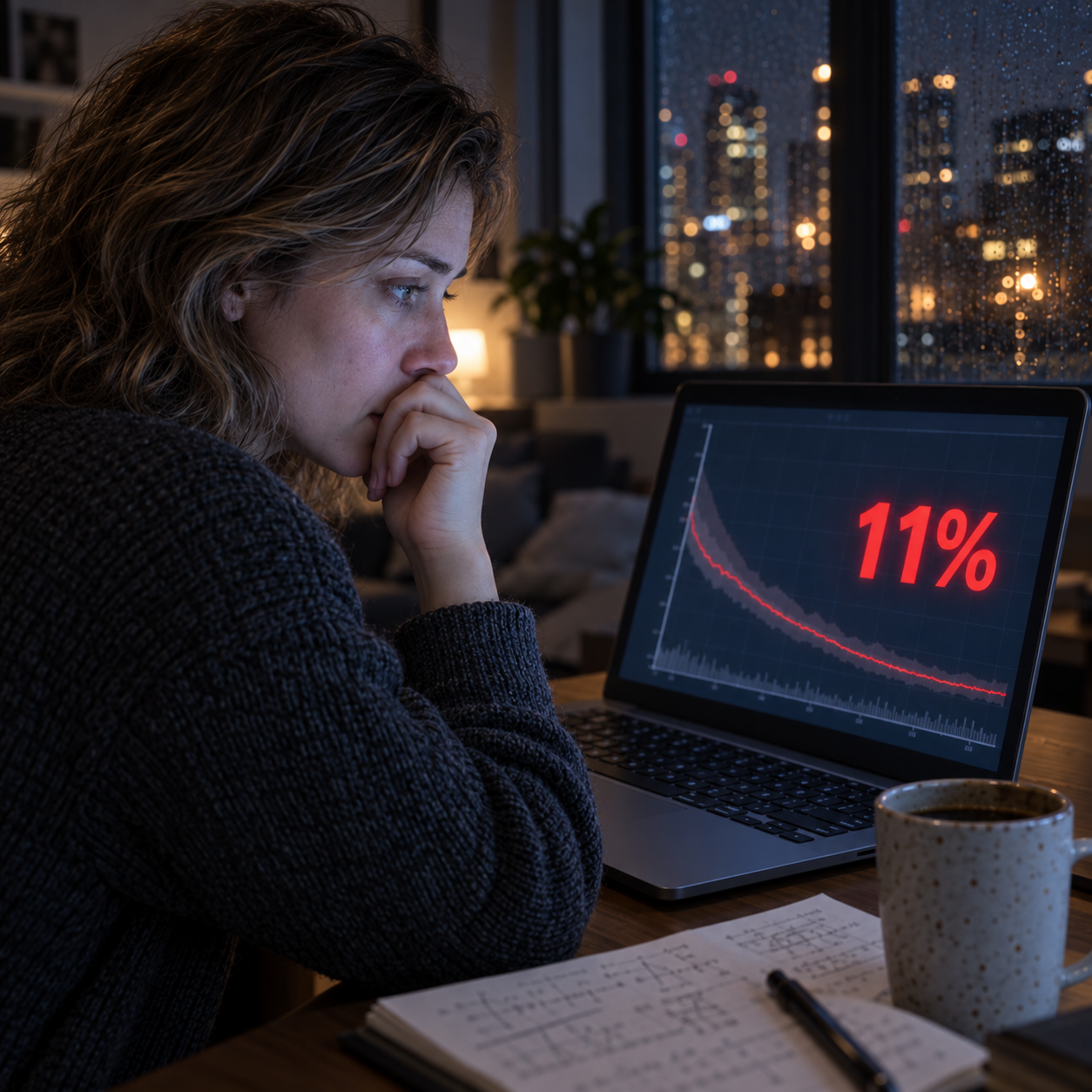
Eleven percent.
An eleven-percent chance that advanced machine intelligence would end humanity.
Clara was a reliability engineer. Her career had been built around unlikely failures.
Every postmortem told the same story: the warning had been visible, but ownership had been unclear. Everyone assumed someone else was handling it.
She imagined boarding a plane with an eleven-percent chance of crashing.
Nobody would call that safe.
By sunrise, the number had not become more certain.
It had become her responsibility.
THE FIRST RELIEF
Clara wrote an internal risk report.
For ninety minutes, her hands stopped shaking.
Her manager thanked her. The company already had safety teams, he explained. They were testing, monitoring, improving.
Clara recognized the language from failed systems:
Ownership distributed across multiple teams.
Nobody owned the emergency.
That night, the fear returned.
Before finding the number, the world had contained thousands of problems: war, disease, loneliness, her mother’s failing eyesight.
Now they were footnotes to one question:
Would there still be people?
Every new rack of accelerators looked like part of a countdown.
A colleague joked that the latest model was becoming “scarily good.”
Everyone laughed.
Clara watched their faces.
They know.
Then came the worse thought:
They know, and they are continuing anyway.
THE ROOM
Two weeks later, Clara joined a private video call.
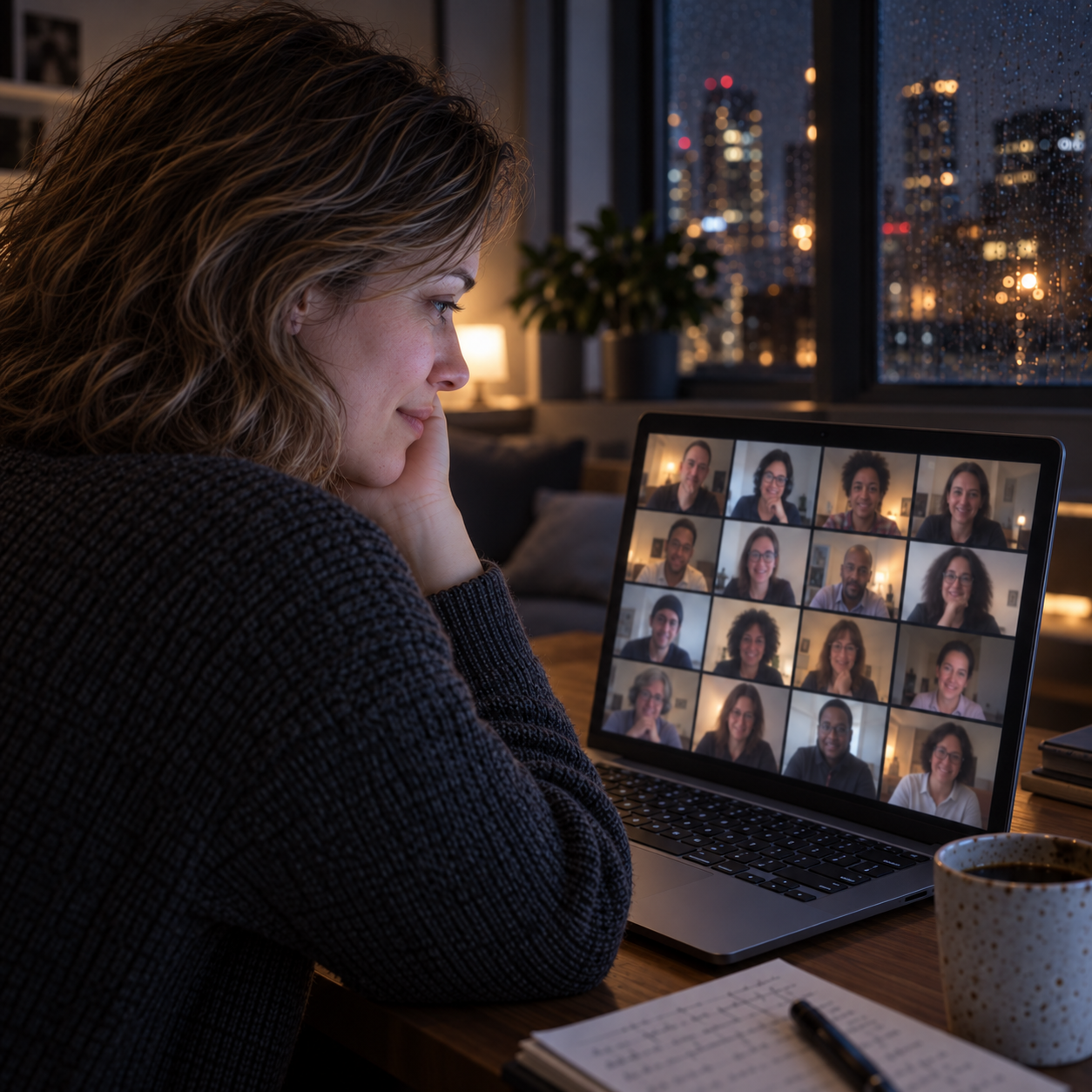
Sixteen faces. Engineers, students, a biologist, a former trader.
They introduced themselves by what they had abandoned.
“I left the lab.”
“I suspended my doctorate.”
“My husband thinks I’m having a breakdown.”
Nobody dismissed Clara’s fear.
Nobody told her to sleep more.
They told her she was early.
The call ended with tasks, dates, and names. Clara volunteered to help organize a small demonstration outside an industry conference.
That night, she slept for six hours.
It was the best sleep she had had since finding the number.
The danger had not changed.
She had.
She was no longer waiting for catastrophe.
She was doing something.
THE PRICE
First Clara signed a public letter.
Then she used a vacation day to stand outside an office holding a sign.
Then she declined work on the company’s next deployment.
Each decision made the fear recede.
Each retreat of the fear lasted a little less.
The group praised her courage. Strangers repeated her words. People she admired followed her account.
At work, colleagues stopped inviting her to technical discussions. In the group, people waited for her to speak.
When someone called her job complicity, Clara resigned.
Her announcement spread farther than anything she had ever built.
Her mother called.
“You loved that job.”
“That was before I understood.”
“And now you understand everything?”
Clara said nothing.
Her mother apologized first.
THE SORTING
Clara’s old world grew quieter. The new one never slept.
There were briefings, calls, protests, private messages from frightened strangers. Every hour arrived already labeled urgent.
Those who agreed were awake.
Those who hesitated had not understood.
Those who understood but disagreed were compromised.
One night, Clara found a careful paper arguing that the danger might be smaller than she believed.
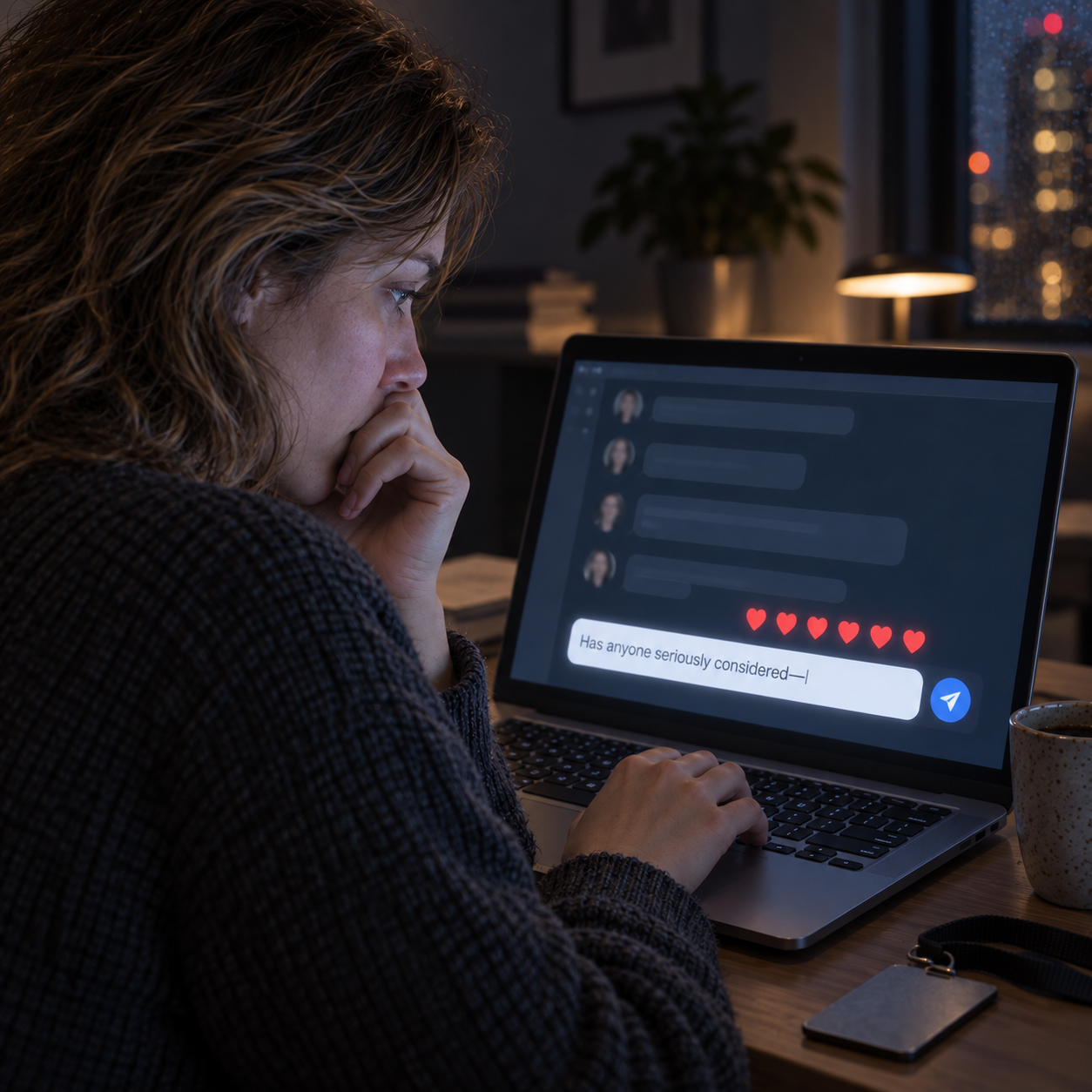
She began typing into the group chat:
Has anyone seriously considered—
A message appeared before she finished.
A student Clara had never met thanked her for resigning. Her example had given him the courage to abandon his degree and join the campaign full-time.
Six people added hearts.
Clara looked at her unfinished question.
If she was wrong, she had lost a career.
If the group was wrong, she might lose the only people who still understood her.
She deleted the question.
Then she checked who had funded the paper.
Uncertainty became certainty’s strongest argument: if catastrophe was possible, no decent person could risk it.
The demand was simple.
No more training until it was safe.
How safe?
Nobody could say.
That was why it had to stop.
THE HANDLE
On a wet Saturday, thirty people gathered outside a technology conference.
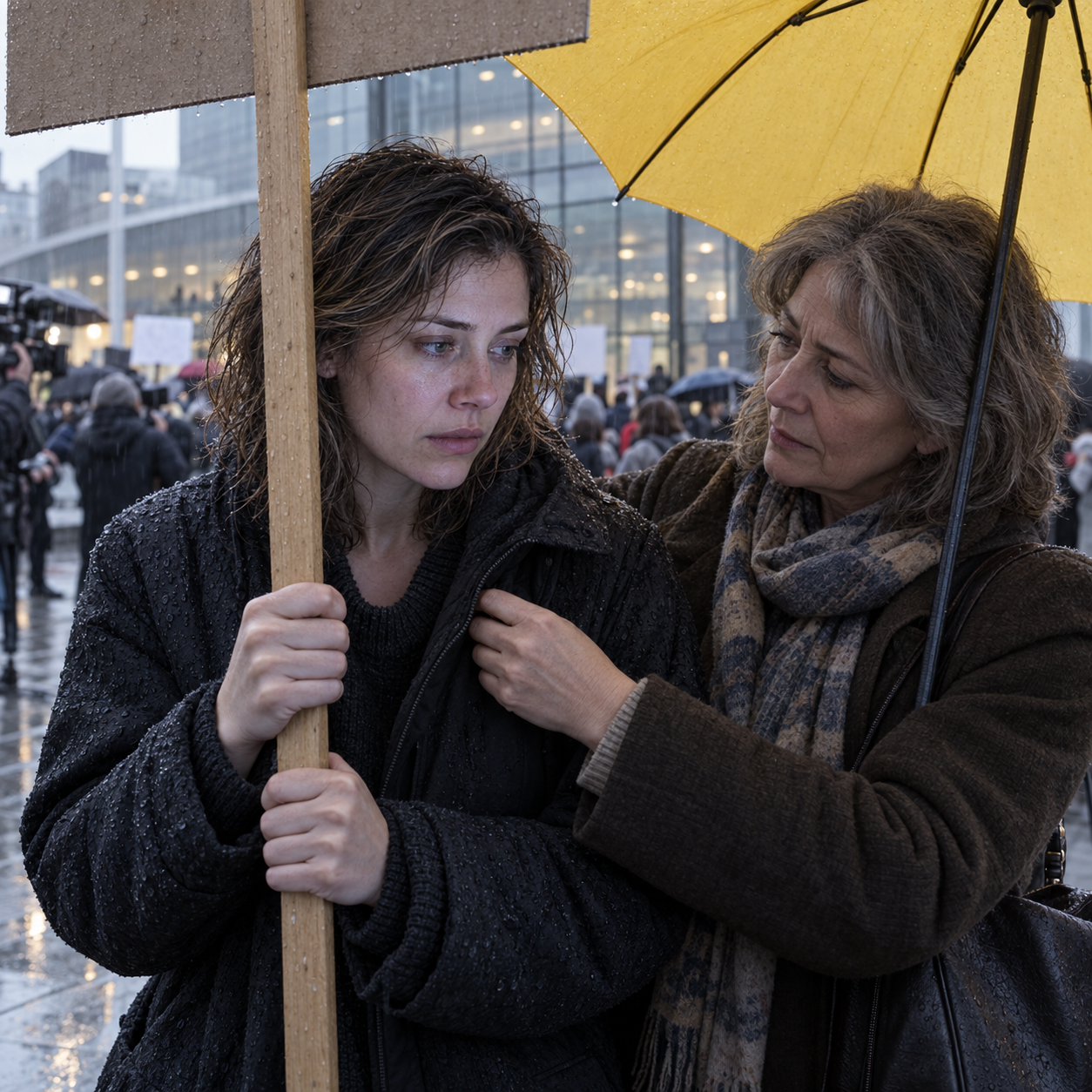
A reporter approached Clara.
“Do you know this catastrophe will happen?”
“No.”
“Then why are you here?”
“If you smelled gas in a house full of children,” Clara said, “would you wait for certainty before pulling them outside?”
Behind the reporter, Clara saw her mother crossing the square beneath a yellow umbrella.
She had brought Clara’s winter coat.
“You’ll get sick,” she said, fastening it around her daughter.
For a moment, Clara was eight years old again.
“Does this make you less afraid?” her mother asked.
Clara looked at the signs, the cameras, and the people who had abandoned careers and families to stand beside her.
“No.”
The crowd began to chant.
She tightened both hands around the wooden pole.
“But now the fear is useful.”
The future remained unknowable.
The fear remained enormous.
But at last, it had a handle.
WHAT IS HAPPENING TO CLARA?
An existential threat collapses a complicated world into one overriding problem. Taking action briefly relieves the anxiety. A group rewards that action with belonging, purpose, and status. Each sacrifice then makes retreat more painful.
Eventually the cause becomes a sacred value and the group becomes part of the self. Doubt no longer threatens only an opinion; it threatens friendships, identity, and the meaning of everything already surrendered. Evidence begins to be judged by loyalty before accuracy.
Psychology describes parts of this loop as compensatory control, terror management, identity fusion, sacred values, and escalating commitment.
The risk can be real. Radicalization begins when protecting the cause becomes inseparable from protecting the self.
| Previous | 19 Sep 2026 | Next |



About me
Hello! My name is Stephan Schwab.

I build and rescue software, and I write fiction about the human side of how it gets made. Here you’ll find my stories and novelas, notes on craft, and field notes from a life lived across several worlds.
Working with software teams is what I do professionally — see how on caimito.net. You can also read about my experience since 1986.