The Common Granary


1. The House
Sarah Miller had given five loaves to the neighbors and kept one for her own six. Her seven-year-old was checking whether that was fair. Ben allowed two slices apiece on his paper, then wrote beneath the arithmetic, Dad’s are bigger. Abby wanted to measure, but Dan had already eaten his, which Emma found suspicious.
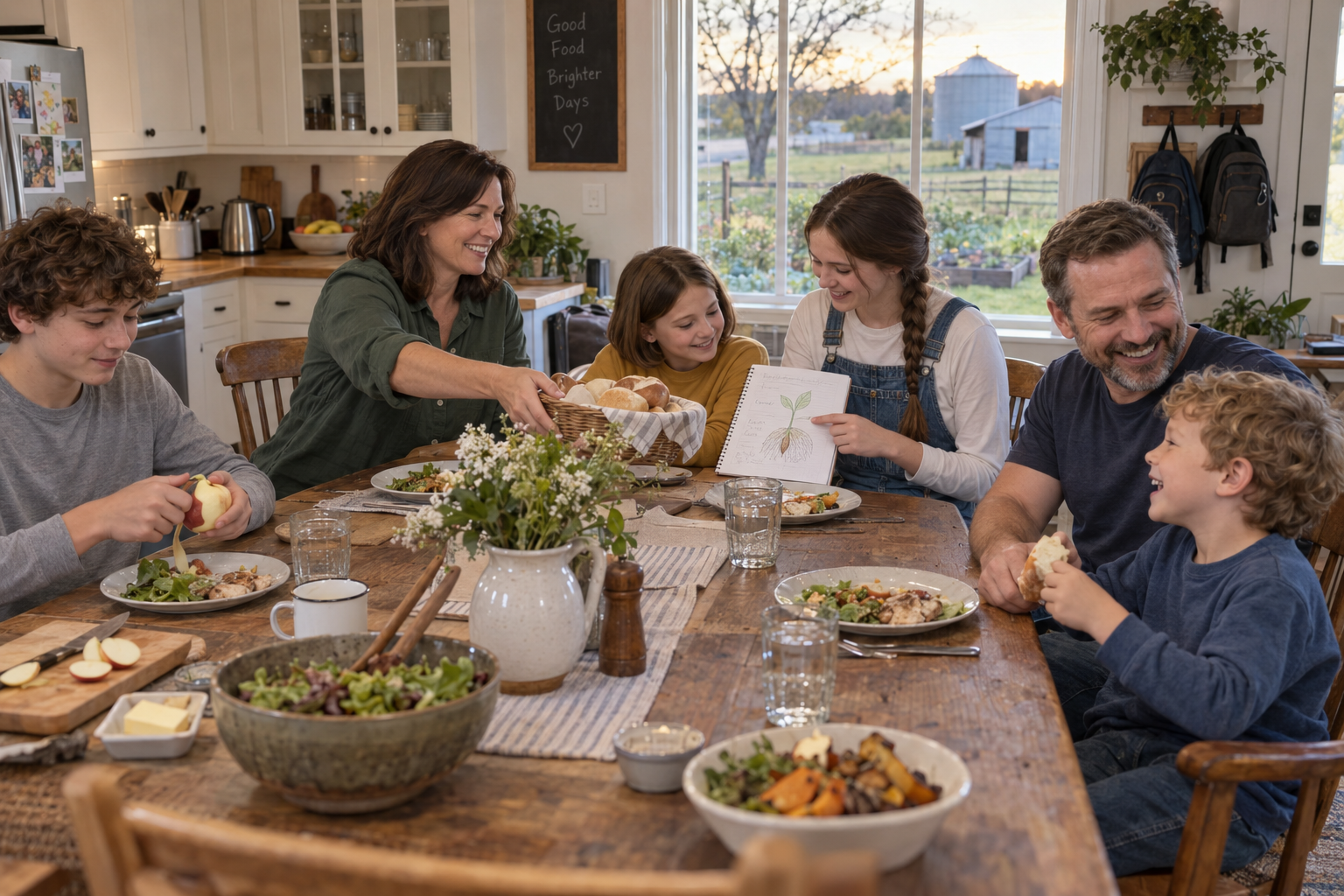
“You’ve raised a household of investigators,” he told Sarah. When she passed him the heel of the loaf, he broke it in half and put the larger piece on her plate.
The grain shed’s fans hummed beyond the window. The highway was three hours away; after dark, theirs were the only lights along this road. Sarah’s shoulders ached from unloading wheat. Dan had flour on his sleeve where Ben had hugged him during bread making.
Their son Luke arrived late after guiding Mr. Peterson through a tire repair.
“He’ll manage the next one without waiting for me,” Luke explained. He had declined payment and asked for help straightening his bike wheel instead. Dan nodded and passed him the bread.
Their eldest, Emma, showed Abby how roots spread beneath plants. Ben requested two worms for the drawing, and she enlarged the field to fit them. Her afternoon pupils had gone home with grain samples and muffins.
Her phone lit with a photograph from Rachel at the reservoir house: a crooked shelf and an upraised thumb. Sarah sent a photograph of the crowded table, and her sister replied with six hearts.
After supper, Emma brought over a jar from the planting sacks. Sarah labeled it with the variety, harvest date, and field number while her daughter checked the notebook. Their food grain waited in the main bins; the seed stood separately on dry pallets, counted for spring.
Before carrying the jar outside, Ben backed against the kitchen doorframe. Dan marked his height, although they had measured him yesterday. Sarah watched her husband bend to write the date beside all the other dates, then fetched a cloth to help Abby wipe the table.
2. The Empty House
Beth Walker counted her coins twice, put the flour back, and told the cashier she had changed her mind. Sarah Miller knew there was a little girl in that house who needed supper. It was February.
The next morning, Beth opened her door to Sarah’s family: Dan held a cooking pot, and Emma carried groceries.

She began explaining that she could pay them back when Jim was working again. Sarah put down the cooking pot and held her until she stopped trying to explain.
Jim’s repair shop had been shuttered for weeks; Sarah had assumed he was working elsewhere. He had become ill while caring for his father. Both were upstairs; the shop had brought in nothing for weeks. Beth had stretched their savings, then their meals. Yesterday she had told her little girl Lucy she wasn’t hungry and watched her eat the last toast. Her application for assistance was still waiting for a decision.
Sarah’s eldest daughter, Emma, cut the bread. Lucy broke her slice in two and asked whether she could take half upstairs to Daddy. Emma gave her another whole slice, then another for her grandfather.
“You can eat yours,” she said. “There’s enough.”
Lucy looked at her mother before she believed it. Beth nodded with her hand over her mouth.
Dan went upstairs. Later, he and their son Luke opened the repair shop to finish jobs Jim could talk them through. Sarah filled the freezer while the younger children played with Lucy. By supper, the house smelled of stew.
That evening, Sarah kept seeing Beth put the flour back. She had passed that dark shop so many times.
At the neighbors’ meeting, she offered grain, kitchen hours, and space in their shed until the old mill store could be repaired. Others volunteered deliveries and visits.
Beth sat beside her with Lucy asleep against her shoulder. This time, Sarah knew what they would eat tomorrow.
3. The Promise
Madison Reed had given her own lunch away again, then argued that no child’s supper should depend on someone choosing to give. Sarah Miller put a warm portion in front of her. She liked this young woman who could not bear to leave anyone hungry.
Madison and four friends had rented a house in town after college.
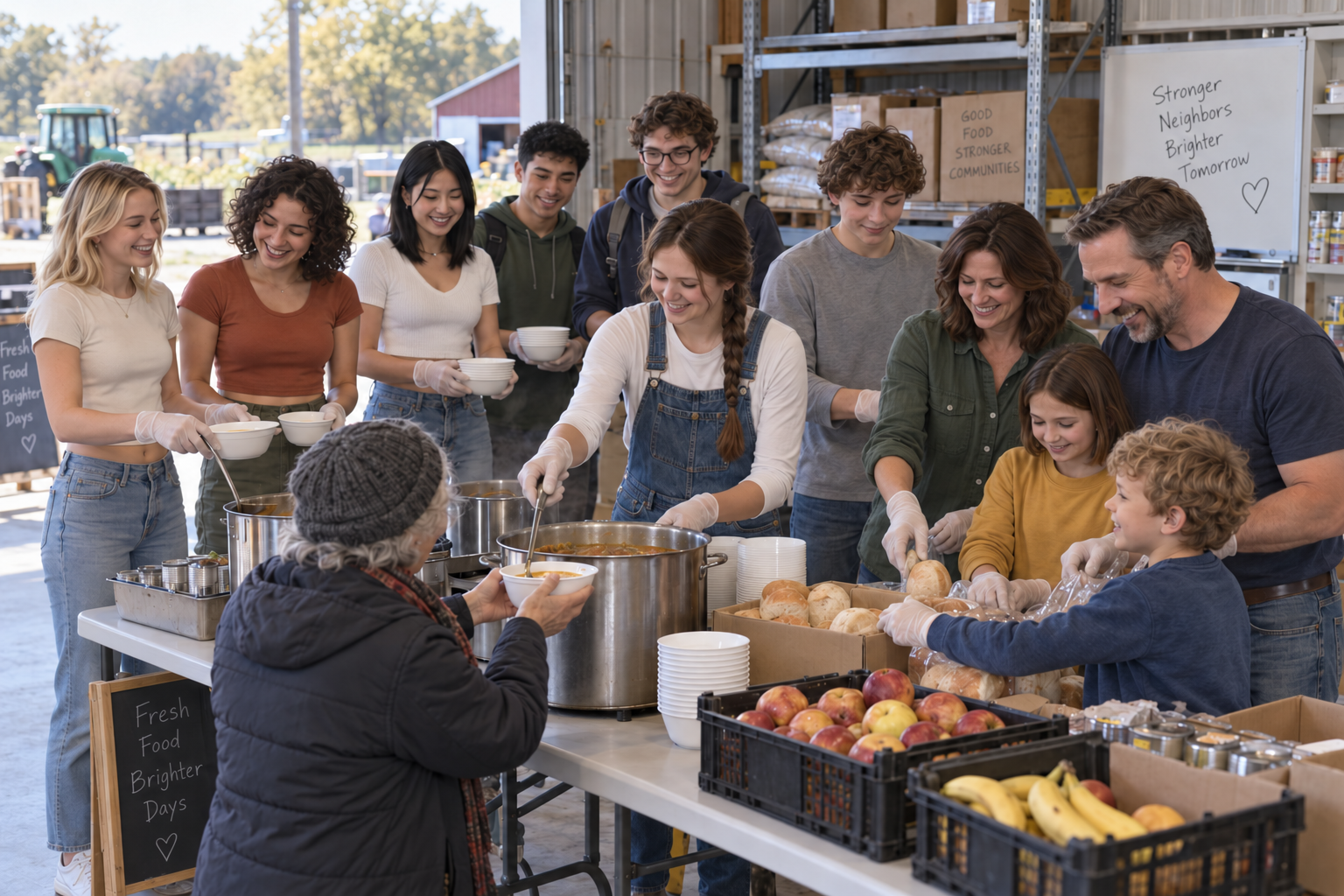
Hannah Brooks had studied education; Olivia Hayes, public health.
Ethan Parker worked through the delivery spreadsheet, while Jacob Morris repaired the shed’s door closer. Madison’s policy coursework helped them apply for equipment for the shared kitchen Sarah’s family had opened.
They called their group Common Share. Sarah had given Hannah a blue mug to keep at the shed. She liked having them around; they noticed the same people she worried about.
The founding agreement fitted on one page. Households chose their contributions and could leave. Food and planting grain were recorded separately; seed stayed with the growers.
Madison wanted assistance changed to guaranteed access. Sarah asked who would make up a shortfall if a household could not contribute. Madison asked why a child’s supper should depend on that household’s decision. They talked past closing, then left the agreement as written.
By spring, Jim Walker had recovered and reopened his repair shop. His father sat outside on warm afternoons. His wife Beth brought bread to share, and their little girl Lucy followed Sarah’s daughter Emma around the shed, copying labels in a careful hand.
Sarah’s older children taught repairs and planting. When ten-year-old Abby caught her finger in a tray, Hannah knelt and held it under cool water until the sobbing stopped. Afterward, Abby slipped her unhurt hand into Hannah’s and stayed there through lunch.
Sarah’s sister Rachel called about maintenance vacancies at the reservoir, with staff housing and a canteen. Her husband Dan thanked her, but they had a farm to plant.
Sarah watched Madison tuck an extra roll into Lucy’s lunch bag. When the young woman looked up, they smiled at one another across the table.
4. The Ledger
“If we grind the seed grain for bread, we’ll have nothing to plant in spring,” Sarah Miller said, crossing the sacks off the kitchen’s food total. Madison took the pen. “But it’s wheat, Sarah. A hungry child has as much right to it as anyone who owns a field.”
The young volunteer who had once thanked Sarah for feeding the neighbors wrote the figure in again.
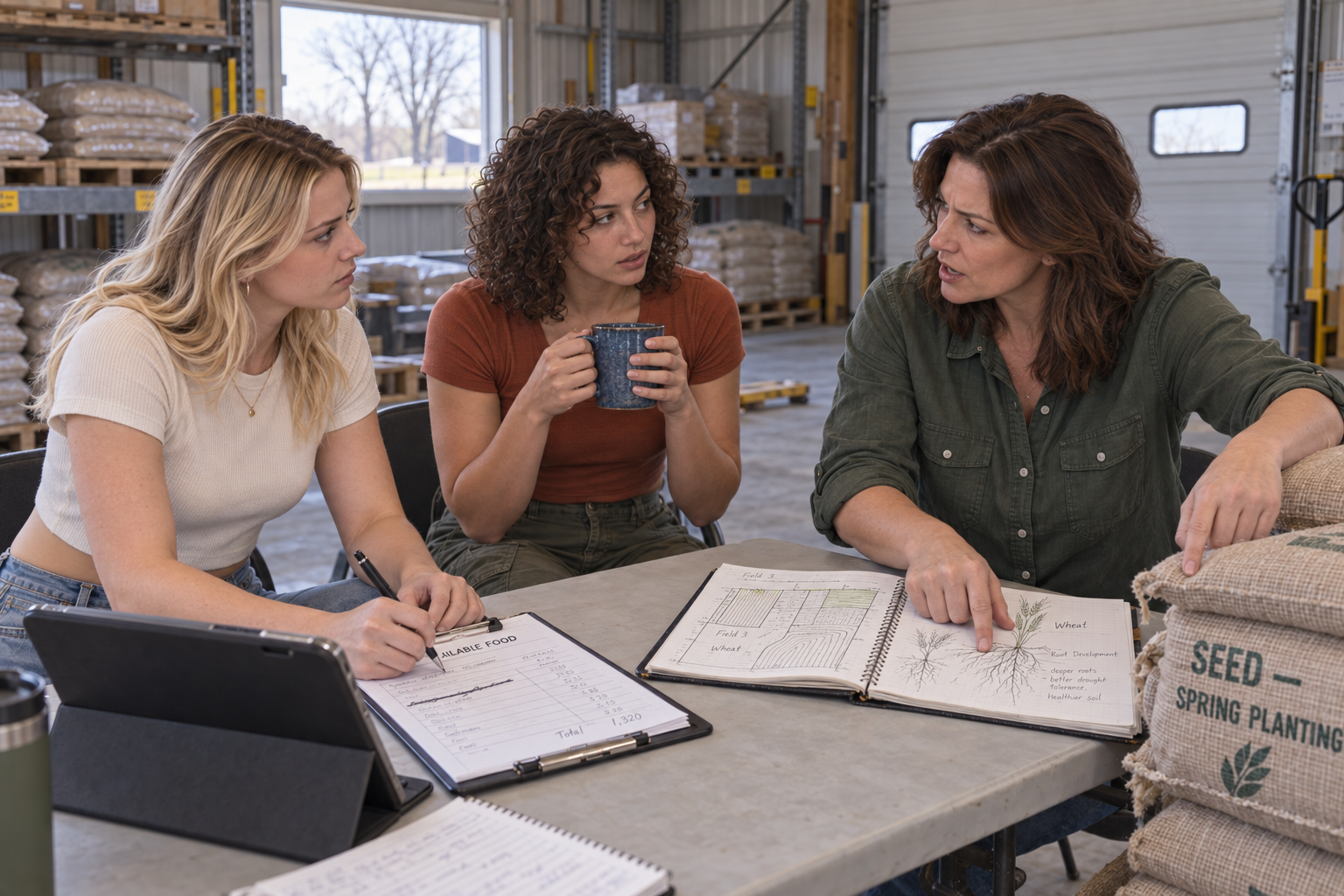
Rain had spoiled the autumn harvest, and deliveries came irregularly. Sarah had promised grain every week, keeping the spring reserve separate. Now Madison and her housemate Hannah were counting everything in the farm’s shed.
Sarah opened her planting notebook. “Each grain can grow a plant. Once we’ve milled it, we can’t get it back. Where will little Lucy’s bread come from next summer?”
“We’ll get more before spring,” Madison said. She opened the supplier list on her tablet. Sarah asked which grower had seed to spare. Madison scrolled, but couldn’t name one.
Hannah wrapped both hands around the blue mug Sarah had given her. “Lucy’s mother watered down her soup yesterday. How do I tell her we’re keeping wheat here?”
Sarah offered another delivery from the food bin. She turned the notebook so Hannah could see the fields. “Keep enough to sow and we can feed her then, too.”
Madison wrote replacement seed to be requested in the margin, then put the full amount under available food. Sarah covered the total with her hand. “You haven’t found a single sack.”
A week later, the assessment arrived. The Millers’ share included the seed. Beside the amount due stood the word expected.
Sarah called Madison. The answer came over the clatter of kitchen dishes: every household had to be counted alike.
“We’ll keep bringing food,” Sarah said. “The planting seed stays here.”
Sarah laid the assessment beside their founding agreement: seed stayed with the growers. She had signed that promise. So had Madison.
5. The Common Measure
Emma Miller was teaching a hungry child how to grow food when Madison covered her planting notebook. “Every child deserves the same chance,” Madison said. “We can’t have lessons teaching them that some families are entitled to keep more.”
“If we eat the seed, what will we plant?” Lucy asked.
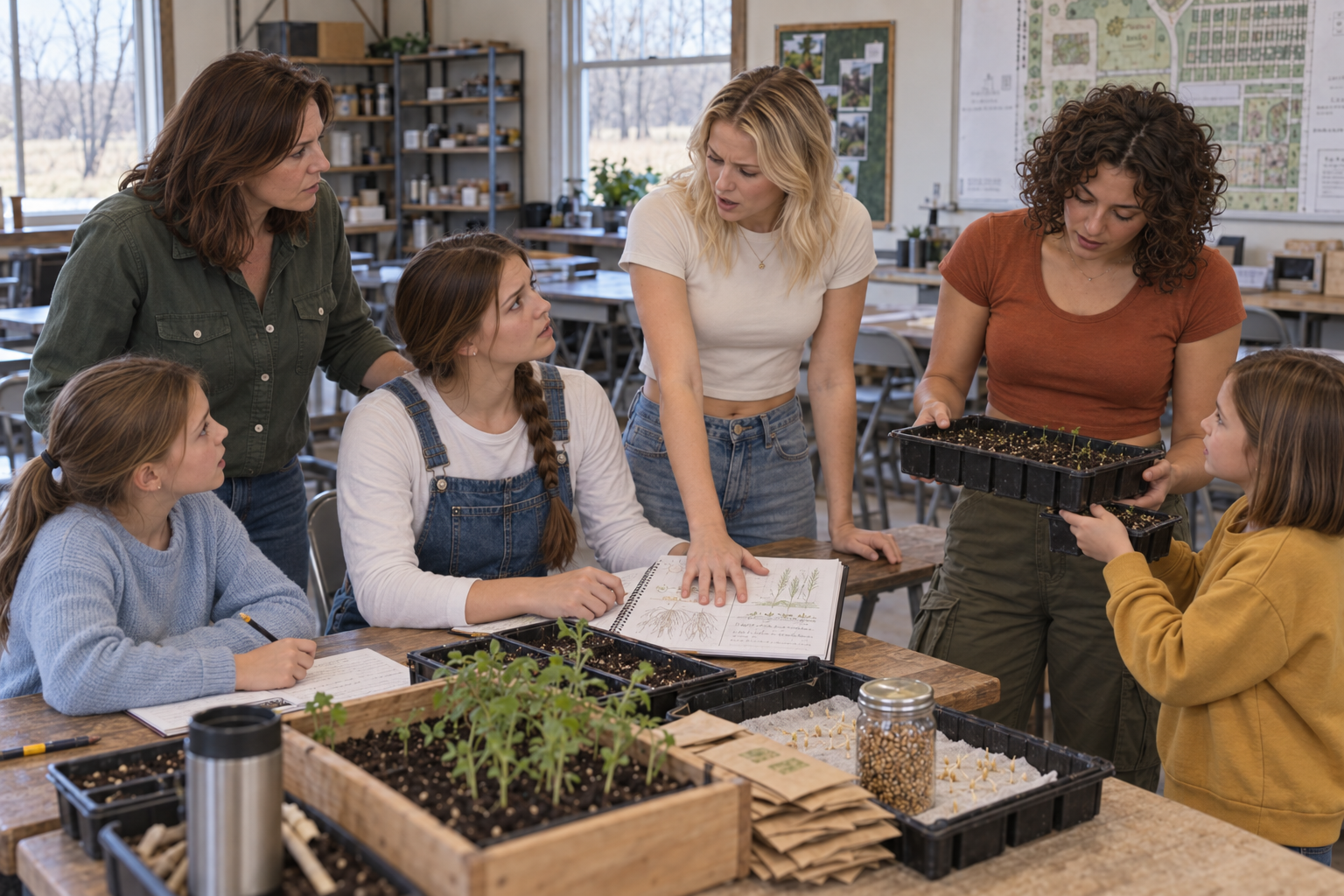
Emma kept her hand on the notebook. Her family had opened their grain shed for meals and lessons; beside the seed trays lay the council’s new order.
Contributions were compulsory, and every food exchange needed approval.
Emma’s mother Sarah had flour in her truck for their neighbor’s beans, an exchange they had made for years. Permission now waited behind thirty other requests. Madison Reed, who ran the kitchen, said the rules would last until access was secure for everyone. Private arrangements favored people with useful goods over those with nothing.
Emma slid a seed tray toward Lucy and lifted the damp paper to show the roots. Lucy’s parents had needed help when her father was ill; the child knew what it meant to wonder about supper. Emma traced a root with her finger, then reached for the page showing what a handful kept for planting could yield.
Madison pressed her palm harder against the page. Lucy looked from the notebook to the seedlings and asked whether she had said something wrong.
Sarah moved beside her daughter. “She’s showing them how to plant.”
“She’s frightening children who have already been through enough.”
Madison’s friend Hannah began collecting the trays. Emma’s little sister Abby held hers out, expecting the smile she usually received. Hannah took it without looking at her.
Emma closed the notebook after the children left, then asked her mother whether she should stop teaching. Sarah kept a hand on her shoulder. Outside, their neighbor Mr. Peterson waited by the truck with a receipt number instead of the beans.