Company Law in Europe


Chapter 1
Our four children sleep beside my workbench. When I file iron after dark, I lay a cloth over their blankets to keep off the dust. My wife is carrying our fifth. She watches me sweep the filings from the table before we eat there.
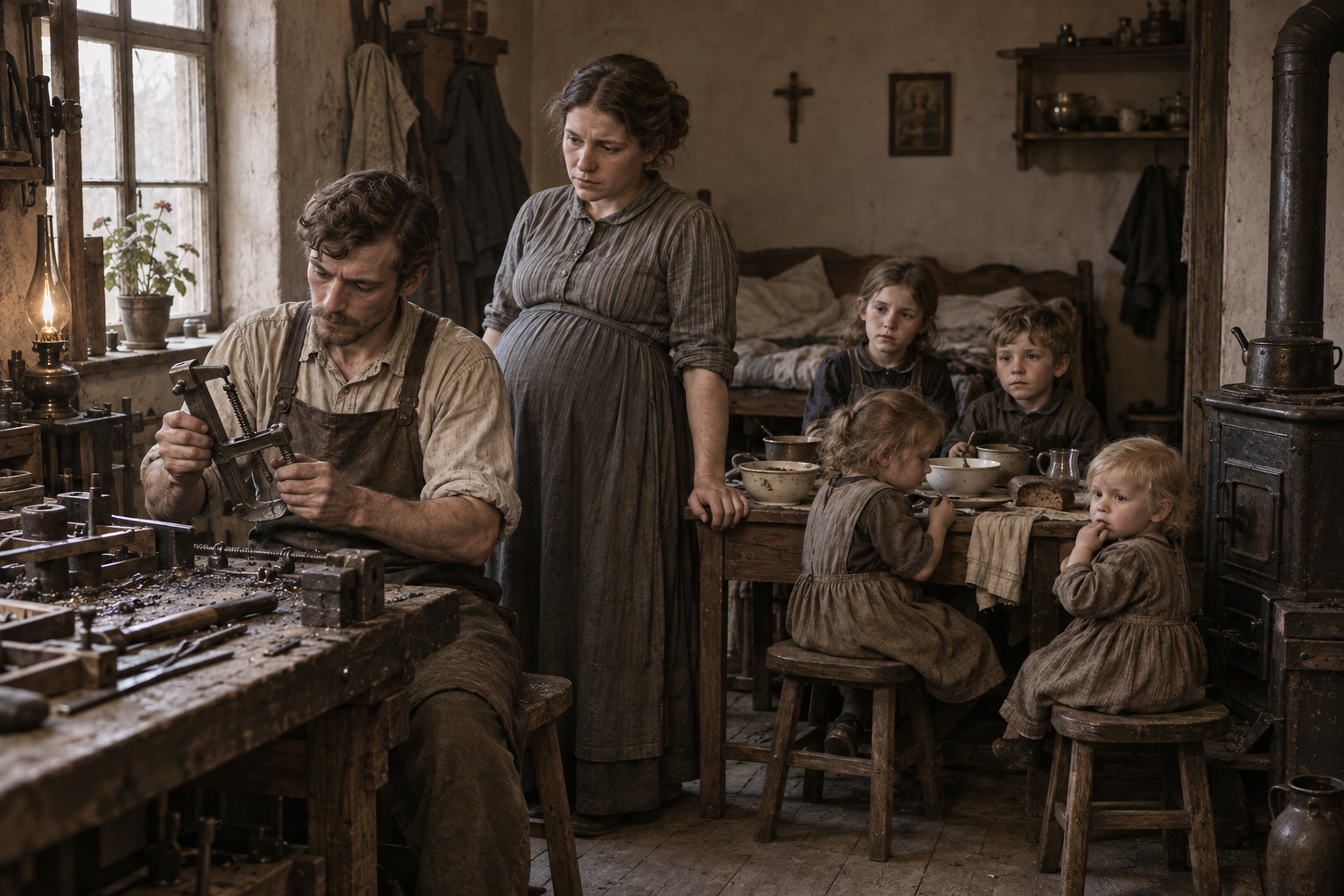
I have made a clamp that holds a board fast with one turn of the screw. The carpenter has ordered a hundred. If I can buy the iron, I can finish them here and perhaps rent a room that belongs only to the workshop.
The iron merchant offers me credit. My wife asks what happens if the carpenter cannot pay. I tell her I have heard of a new kind of company, a Gesellschaft mit beschränkter Haftung. I will ask at the court before I sign anything.
The clerk shows me the new law. It is May 1892. A GmbH needs 20,000 marks of subscribed capital, a formal agreement, paid contributions, and registration. I have my tools and the order in my pocket. Neither will get me through those steps. If I order the iron now, the debt will be mine.
That night my wife stays awake while I count our money. The next morning I sign my name in the merchant’s ledger.
I make sixty-four clamps before the carpenter’s shop fails. He owes me for the work. I owe the merchant for the iron. When he comes for payment, the children are eating at the bench. I have to move their bowls so he can see what I have made.
By winter our savings are gone, and we cannot pay the rent. My wife packs the children’s clothes while I carry the clamps outside. At the carpenter’s sale, a stranger buys them for less than I paid for the iron.
Our youngest asks whether I am coming home with them. I look back at the room, at the clean patch on the floor where my bench stood, and cannot tell him where home will be.
Chapter 2
The apartment my father bought while I studied computer science is for sale because of one missing check in my code. It is 2026 in Germany. I built a SaaS on my laptop, registered my trade, and began working as a sole proprietor. The regulator’s letters carry my name.

My idea was simple: a place for families to keep care schedules for their aging parents. An address, a medication list, a phone number for whoever had the keys. I could build it myself. I had no investors and no cash for the capital required to form a standard limited-liability company. I did not want to spend my launch money on a notary and company registration. I began charging subscriptions in my own name.
By spring, families I had never met were using it. One evening a customer sent me a link to another family’s care plan. In the export function, I had checked that a user was signed in. I had not checked that the record belonged to that user. Someone had changed the number in the request and downloaded hundreds of plans before I closed the gap.
I reported the breach and wrote to the families. One woman called to say that her mother’s diagnosis and home address were in the downloaded files. I tried to explain the fix. She asked me who had read them. I could not tell her.
The state data-protection authority investigated my safeguards and fined me. Then came the claims from people whose information had been exposed. Some sued. The letters were addressed to me, not to a company. I paid a lawyer, then settled what I could. My savings and the subscription income were nowhere near enough.
Father had put the apartment in my name when I started my computer science degree. It was the only thing I owned that could cover the rest. At the notary’s office, I signed the sale papers with the same hand that had written the export function.
On moving day, Father found the key ring he had given me for my first semester. He held it out, then remembered it no longer opened a home of mine.
Chapter 3
I won our first big customer. Four months after we requested our EU VAT number, it still cannot start: our German limited-liability company has no number. It is 2026 in Cologne. My boyfriend built the SaaS; I sold it. We have a company, a notary’s bill, and no sale.

Jonas and I are both 26. He wrote scheduling software for home-care agencies at our kitchen table. I took it to trade fairs, called agency directors, and learned to give a demo while a train lurched beneath my feet. A Dutch care group wants to put 400 workers on it. Its director showed me the rollout plan herself.
We formed a GmbH so the company could sign its contracts. At the notary’s office, Jonas and I sat side by side while the notary read our deed aloud at a pace I could barely follow. Jonas smothered a yawn. I stared at the clock, thinking about the customer waiting for us to begin. We signed, paid in the required capital from our savings, and waited for the commercial register. When our company appeared there, we thought the waiting was over.
We requested an EU VAT identification number in our tax registration. Our local tax number arrived. The separate EU number did not.
The Dutch group’s purchasing department will not release its order until it can validate our EU VAT number. I can send the contract. Jonas can switch on the software. Their director has staff ready to train. But she cannot get us through her own purchasing system, and every week she asks for a start date I cannot give.
At first I said, “Any day now.” After the second month I stopped saying it. After the third, Jonas stopped asking whether there was mail. The servers, the accountant, and our rent still had to be paid.
Today the director called again. Her team is making next month’s schedules without us. She asked me to be honest: should she find another supplier? I said I would call her back.
I put down the phone and cried at the kitchen table, furious that I could lose the customer I had spent a year winning. Jonas closed the laptop where his finished software was running. He sat beside me. The VAT number still had not arrived.
Chapter 4
I need the King’s permission before my company can shield me from its trade debts. The men with money can wait. The silk merchant cannot. It is 1837 in Lyon, and he wants my signature for his bales by Friday. He knows where my children sleep.
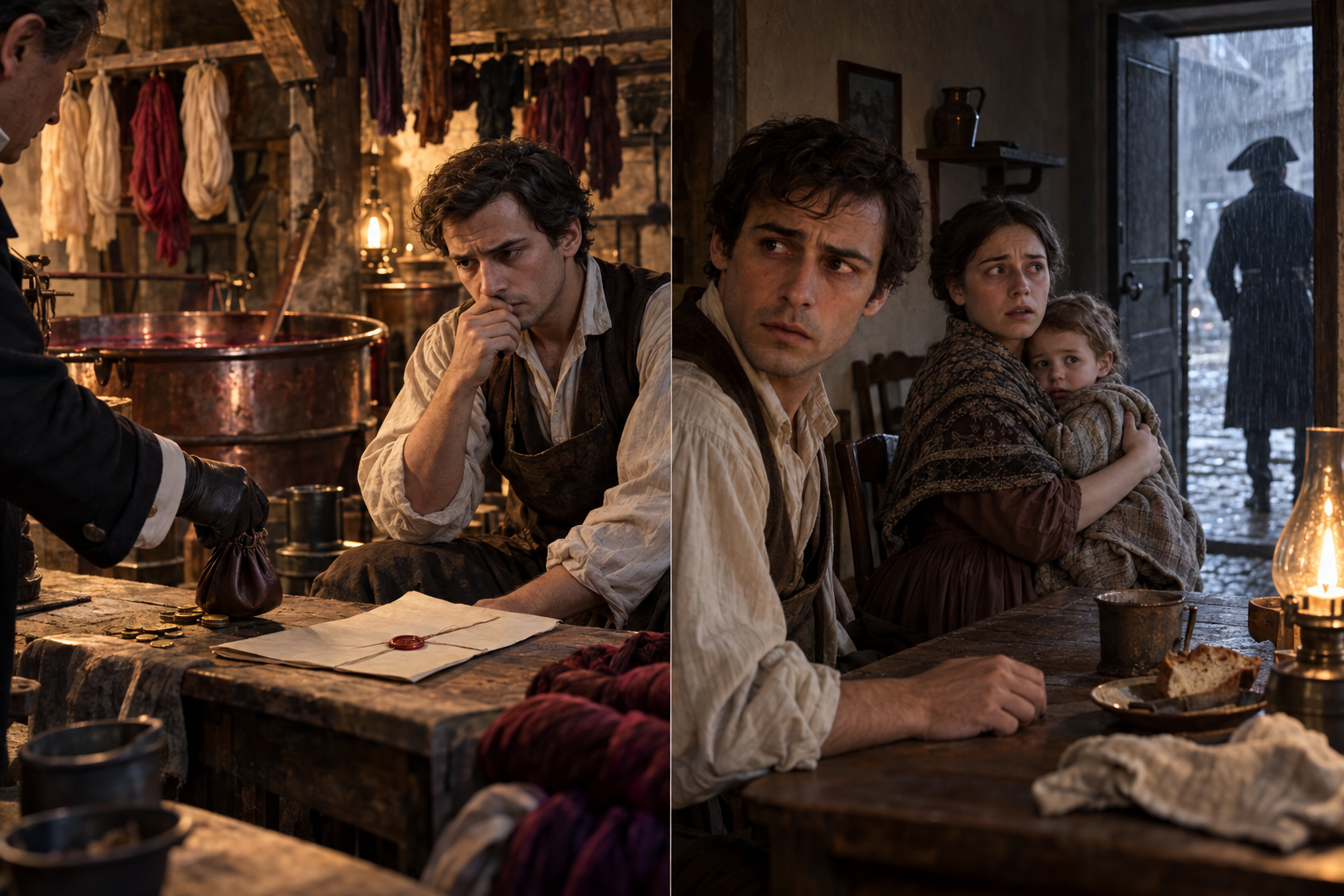
I know how to dye silk without weakening the thread. Several merchants will put up money for a larger works, but they will not run it. We ask the notary to draw up a société anonyme. If it fails, each of us can lose what he has invested. The law says the government must authorize the company and approve the deed that creates it.
Our papers go to Paris. Weeks pass. Then months. The merchant comes to the workshop again. He will sell me the silk on credit, but he will not wait for a permission I cannot promise him.
One of the investors lays another deed on the table. We can start now as a commandite par actions. His risk ends with the money he puts in. Mine does not. I will manage the works, so I must be the partner who answers for its debts.
My wife reads the deed while our youngest sleeps against her shoulder. She puts her finger beside my name and asks whether the house is part of the bargain. I tell her the orders are good. I sign.
By autumn the vats are working and we have paid six men. Then a fire takes the works and the silk I bought on credit. The investors lose their shares. The merchant still has my signature.
The bailiff writes down our table and then the beds. My son says the King may yet send his answer. I cannot tell him what use it would be now.
Chapter 5
The King’s authorization is on Father’s desk before our new dye vats reach Lyon. It is 1837. Our family has the money to enlarge its silk dye works. Just as useful, Father knows whom to ask in Paris.

We are a noble family, and Father is received at the Tuileries. When he decides the new works should be a société anonyme, an old acquaintance introduces him to a banker who has helped form one. The banker recommends a lawyer who knows the questions the ministry will ask. The lawyer tells our notary what must be in the deed before we send it.
Father summons me to his study. The plans for the dye house cover one table; the accounts cover another. Our subscribers have agreed to their shares. The lawyer has checked the papers. I take them to Paris, where he can answer the ministry’s questions without waiting for a letter to find us in Lyon. The Council of State gives its opinion. Before summer, the royal ordinance authorizes our company and approves its articles.
When the silk merchant brings his bales, he accepts the company’s signature. The new vats begin to turn. We meet our orders and pay him on time. He returns with more silk, and Father asks the mason where we might put a second dye house.
Chapter 6
The mare behind his gate could have paid my coal bill twice over. I stood there in New York in 1848 with the pigment works’ invoice in my hand, trying to understand why the man who owned her could send me home empty. My wife was waiting for that money.
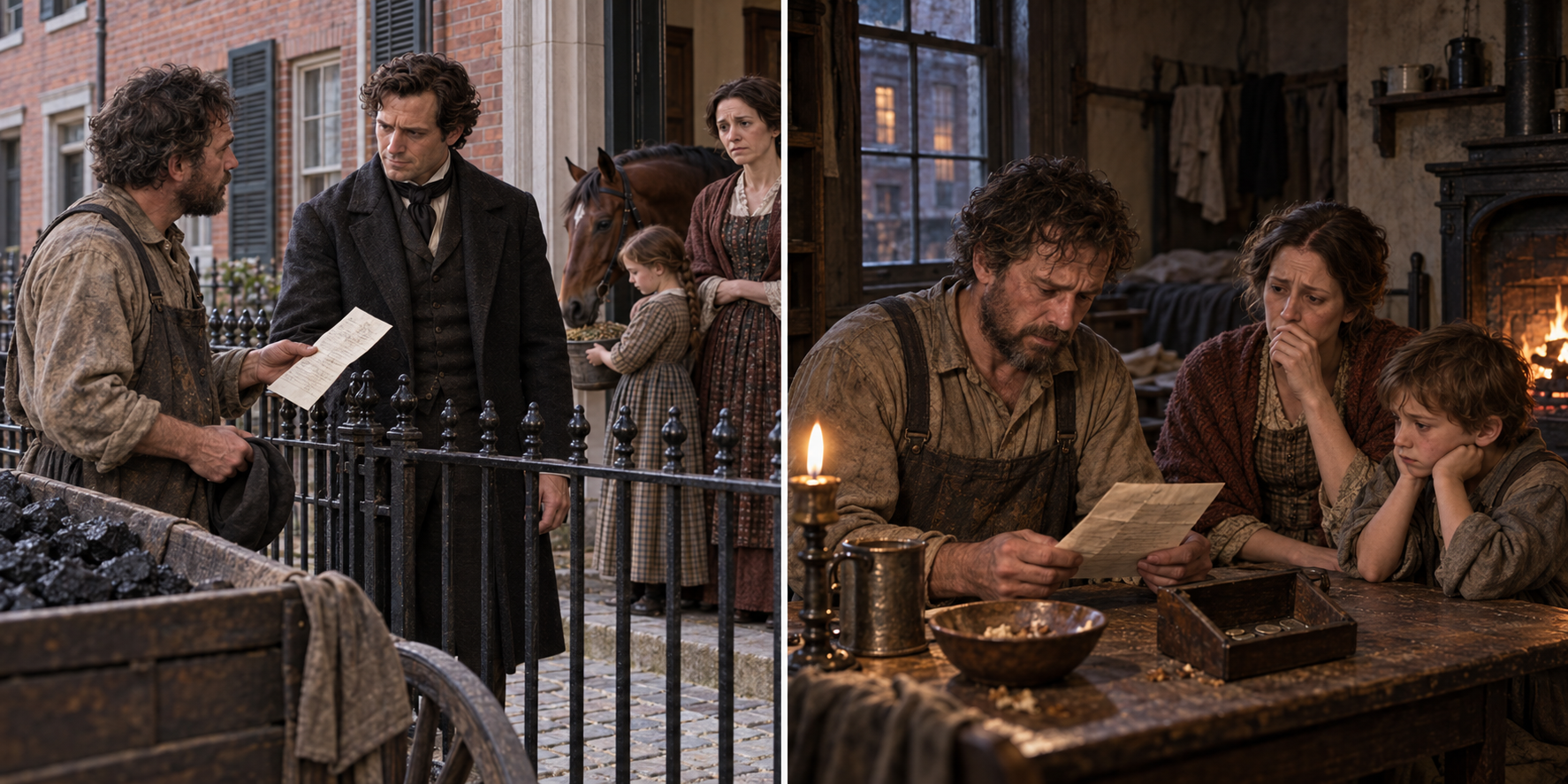
I had hauled coal to the works since spring. Three men had started it to make blue pigment for cloth printers. They had signed a certificate at the county clerk’s office and sent a duplicate to the secretary of state. The founder had told me, smiling, that they hadn’t needed a legislator to grant them a charter. I had liked the sound of that.
For weeks I watched the men heat the vats and fill blue-stained barrels. Then a cloth printer ordered more than they had ever made. I brought another wagon of coal. The printer took the first barrels and failed before paying. When I came back with my bill, the fires were out.
The founder met me at his gate. Behind him, his daughter held hay up to the mare. He said the works had no money left. I asked him to pay me himself. He shook his head. Hadn’t he ordered the coal? I had watched him nod when I brought the wagon in.
I went to the county clerk. The founders had paid in all the money they had pledged to the company, and another certificate recording that payment had been filed before I sold them the coal. I took the record and my invoice to a lawyer. My invoice named the works. I wanted the founder’s signature on the company papers to count as a promise to me. He had signed no such promise on my bill.
The lawyer said I could pursue what remained of the works. I pictured the cold vats, then the mare eating in the yard. I knew which one would fetch a better price.
I went back to the gate once more. The founder came out with his wife. His daughter stayed beside the mare. I folded my bill and walked home.
My wife opened our coin box. Our son asked when the coal wagon would go out again. I looked at the few coins inside and said, “Tomorrow.”
Chapter 7
The coal merchant stood at my gate, looking past me at the mare. He could not make me sell her for the pigment works’ bill. Then our four workers came for their wages. New York, 1848: by evening, my daughter would watch a stranger lead the mare away.
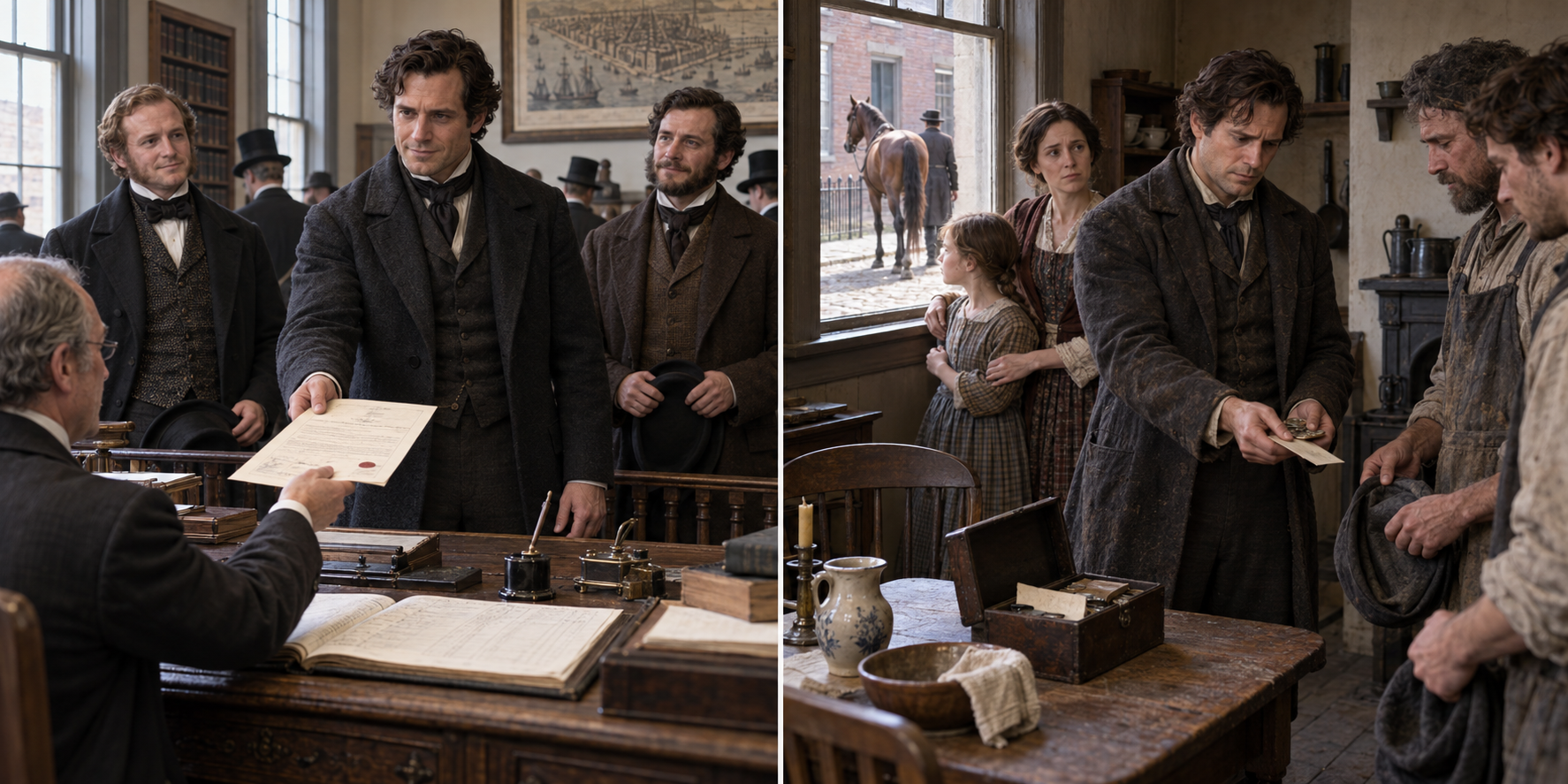
That spring, two partners and I filed a certificate with the county clerk to make blue pigment for cloth printers. We sent a duplicate to the secretary of state. We had formed a corporation without asking the legislature to grant us a charter of our own.
We paid in every dollar we had pledged as capital and recorded another certificate for that payment. I took both papers home. My wife read the company’s name. I looked from the papers to the mare outside and told her a coal merchant could no longer demand the horse for a bill against the works. Our daughter asked if she could ride past the blue barrels when the next order was ready.
The next order was larger than any we had made. Four men ground color and filled barrels. We bought coal on credit. The cloth printer took the first shipment, then failed before paying for it. The vats cooled. There was no money for the men who had kept them burning.
On Saturday they came to our house. One held out a sheet with their hours. I asked them to wait while I found the law under which we had formed the company.
I had passed over one line. For wages owed to our laborers, it made us shareholders answerable ourselves. I read it twice, hoping I had mistaken the words. The coal merchant had gone home with a bill against the works. These men stood in my kitchen with a claim against me and my partners. I had shown my wife the wrong part of the paper.
My partners brought what they could. I could have asked the men to wait longer, but they had already given us their weeks. I sold the mare I had owned before there was a company. Then I counted the rest of the wages into four waiting hands.
My daughter watched the buyer lead her down the street. She stayed at the window long after they were gone.
Chapter 8
The government no longer decided whether I could form a société anonyme. My brother did. Lyon, 1867: I had six willing shareholders and an empty seventh line. The silk merchant wanted my name on his bill. If I signed myself, the rooms above my vats stood behind the debt.

I could dye silk without dulling its sheen, but my two vats were too small for the order a cloth house had offered me. Six of us had agreed to put money into larger works. The merchant would supply the raw silk on credit once he knew who was buying it. He left his bill blank on my table.
My brother had savings meant for his son’s apprenticeship. I wanted him to take a share in the company, and I hated asking. He had watched our father die with a shop full of unpaid accounts. I could see him remembering the men who had come to settle them.
I showed him the new law. For a société anonyme, no one now had to carry our papers to Paris and wait for permission. But there had to be seven of us. Six names lay on the sheet between us. I had written the seventh line and left it empty.
“How much can I lose?” he asked.
I told him he would owe the whole sum he subscribed, though only a quarter had to be paid at the start. I watched him look toward his son’s room. I wanted to say the order could not fail. I could not know that. I told him what I did know: I would let the new company buy the silk. I would not put his name, or mine, on the merchant’s bill as a personal promise.
He took the pen. I had brought him a piece of silk dyed in my smallest vat. He held it to the light for a long time before he signed.
The signatures were only the beginning. We subscribed the capital, brought proof of the first payments to the notary, and sat through the meeting that appointed the people who would run and examine the new company. I kept the merchant’s blank bill in my coat until we could give him the company’s name.
He came back, looked at the papers, and made the bill out to the works. By winter we had filled the cloth house’s order and paid him. My brother brought his son to see the finished silk hanging above the vats. The boy touched a blue length and left a mark on it. My brother laughed before I could object.
Chapter 9
The silk merchant laid two bills beside my account book. One named our new company. The other needed my signature. Lyon, 1925: my son and I had put 25,000 francs into that company so its ordinary trade debts would not follow us upstairs. He wanted my name anyway.

Our dye workshop sat below the rooms where my wife and I slept. At night she could tell which color I had made by the smell rising through the floorboards. For twenty years I had bought silk in my own name. If a customer failed to pay, an unpaid bill could reach everything I owned.
Jean had won an order from a Paris dressmaker: three hundred lengths of blue silk. We knew how to make the color. We needed a larger vat and silk we could buy on credit. A company with shareholders had seemed beyond us. It took seven names, and Jean was the only person I trusted with our accounts.
Then he brought me the new law. The two of us could form a société à responsabilité limitée. We signed the company deed ourselves. Finding the capital was harder: 25,000 francs, with every share paid in full. Jean gave up the savings for a house of his own. I emptied the tin we kept above the stove. Once the papers were complete, some of that money bought a copper vat. We still needed the silk.
The merchant looked at the company’s name on the first bill.
“And if the dressmaker never pays you?”
“The works will owe you.”
“Only the works?”
He pushed the second bill toward me. My name was written above a space for my signature.
I thought of Jean’s savings shining in that new vat. I thought of the rooms above it. Jean said nothing. I set down the pen.
The merchant folded both bills and sold the silk to another dyer. That night the vat held nothing but water. Upstairs, my wife asked whether we could keep our apprentice through winter. I had no answer. The rooms were ours. The order was gone.
| Previous | 25 Sep 2026 | Next |




About me
Hello! My name is Stephan Schwab.

I build and rescue software, and I write fiction about the human side of how it gets made. Here you’ll find my stories and novelas, notes on craft, and field notes from a life lived across several worlds.
Working with software teams is what I do professionally — see how on caimito.net. You can also read about my experience since 1986.