The Little Oracle
Thirty years from now, nobody called it artificial intelligence anymore. That sounded like a product category, like something you could still choose to buy or ignore. By then it was simply the weave: in the walls, in the roads, in the skin of public things, in the quiet domestic machines that carried old people from bed to bath, in the municipal drones that pruned trees at night, in the school mirrors that corrected a child’s posture and mood before breakfast.
Robots were everywhere, though hardly anyone used that word either. There were kitchen hands, street cleaners, field bodies, shop carriers, roof crawlers, elder companions, bed turners, grave gardeners, delivery shells, tunnel inspectors, infant watchers, river skimmers, harvest frames, and the pale soft machines in hospitals that moved with such tenderness people sometimes cried when a human nurse entered the room.
Work had not disappeared. That was one of the old predictions that had failed in the usual human way: too cleanly. Work remained, but it had lost its throne. It no longer explained who a person was. It no longer promised dignity, rescue, belonging, romance, status, or salvation. The old question, what do you do, had become almost intimate, almost rude, like asking someone which pills they took or how often they woke afraid.
A few people still worked with the old fire. They lived close to the newest systems, where matter, models, and money braided themselves into fresh powers. They designed the decision forests that governed cities, taught swarm machines to repair coral reefs, tuned the dream engines used in grief therapy, grew organs in patient vats, negotiated with semi-autonomous markets, or built the large planetary models that advised ministries before storms, famines, migrations, and elections.
They were admired, feared, and treated as slightly unwell.
People said they had exceptional drive, but that was only half true. Some had vision. Some had vanity. Some had been born into the layers of society where ambition was still a language spoken at the table. Others had climbed there from hunger and kept climbing because they could not bear to look down. The lower steps of Maslow’s old pyramid had not vanished under abundance. They had become more subtle. Safety now meant access credentials, model trust scores, emotional compliance records, housing allocation, debt weather, medication continuity, legal identity, and whether your personal assistant could still persuade the systems that you were worth routing around harm.
For ordinary people, life had become easier in thousands of ways and harder in the one way that mattered. Nobody had to remember forms, compare insurance, plan meals, choose routes, translate contracts, track medication, argue with utilities, write apologies, apply for benefits, diagnose coughs, calculate rent futures, or pretend to understand the small print. The weave did all that. It whispered, arranged, softened, corrected, negotiated, anticipated.
And still people were tired.
They were tired because every choice had multiplied behind the scenes. Every yes opened into unseen probabilities. Every refusal had consequences in systems nobody could fully see. A date, a diet, a sentence sent to a manager, a child’s school preference, a medical intervention, a move to another district, a subscription, a protest, a friendship with someone flagged by something somewhere. Each decision touched the weave, and the weave remembered.
So people carried the little oracles.
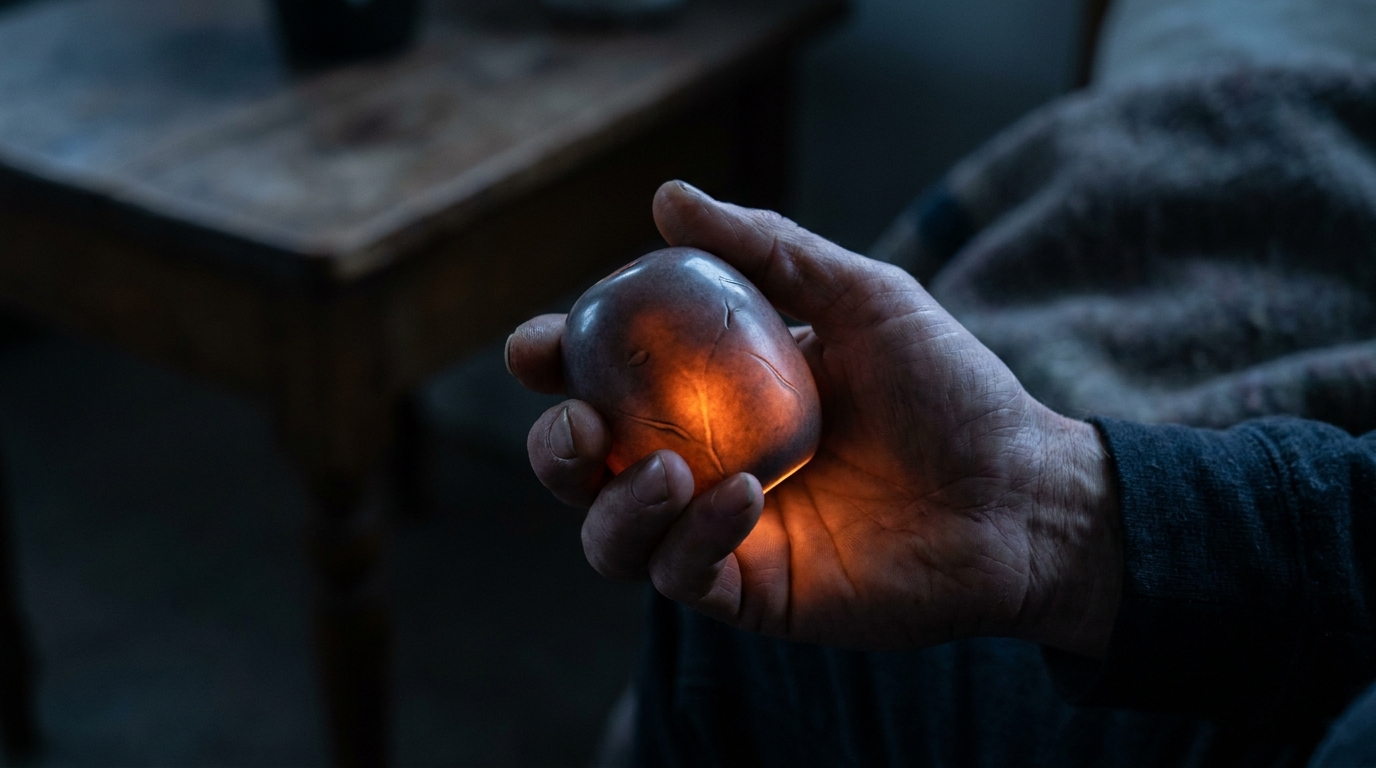
They were no larger than a plum and usually warm from the hand. Some were worn on cords against the chest. Some hung from belts in leather pouches. Some were set into bracelets, prayer beads, rings, carved cases, old silver lockets, printed bone, blown glass, ceramic shells, polished wood, or black corporate resin. Children were given cheap ones at seven. Lovers exchanged paired ones. Widows slept with them under the pillow. Migrants kissed them at borders. Prisoners were allowed one by law.
Officially they were personal guidance companions: secure local agents trained on the owner’s history, needs, constraints, biometrics, memories, preferences, fears, debts, kinship maps, and civic obligations. They could speak through implants, walls, glasses, teeth, or air. But most people preferred the little body in the hand. The weight mattered. The warmth mattered. The fact that it had to be carried mattered.
The old people called them familiars. The young called them gods when they were joking and gods when they were not.
Each oracle had a face, though not always a visible one. Some displayed a changing glyph, some a child’s animal, some a moon phase, a saint, a flame, a seed, an eye, a river stone, a grandmother’s initials, a rotating knot of light. The face was not decoration. It was the mask through which the weave became small enough to trust.
Before leaving home, people touched the oracle and waited for the morning counsel. Green meant go by instinct. Blue meant delay. Amber meant speak carefully. White meant ask again with better attention. Red meant do not cross the threshold yet.
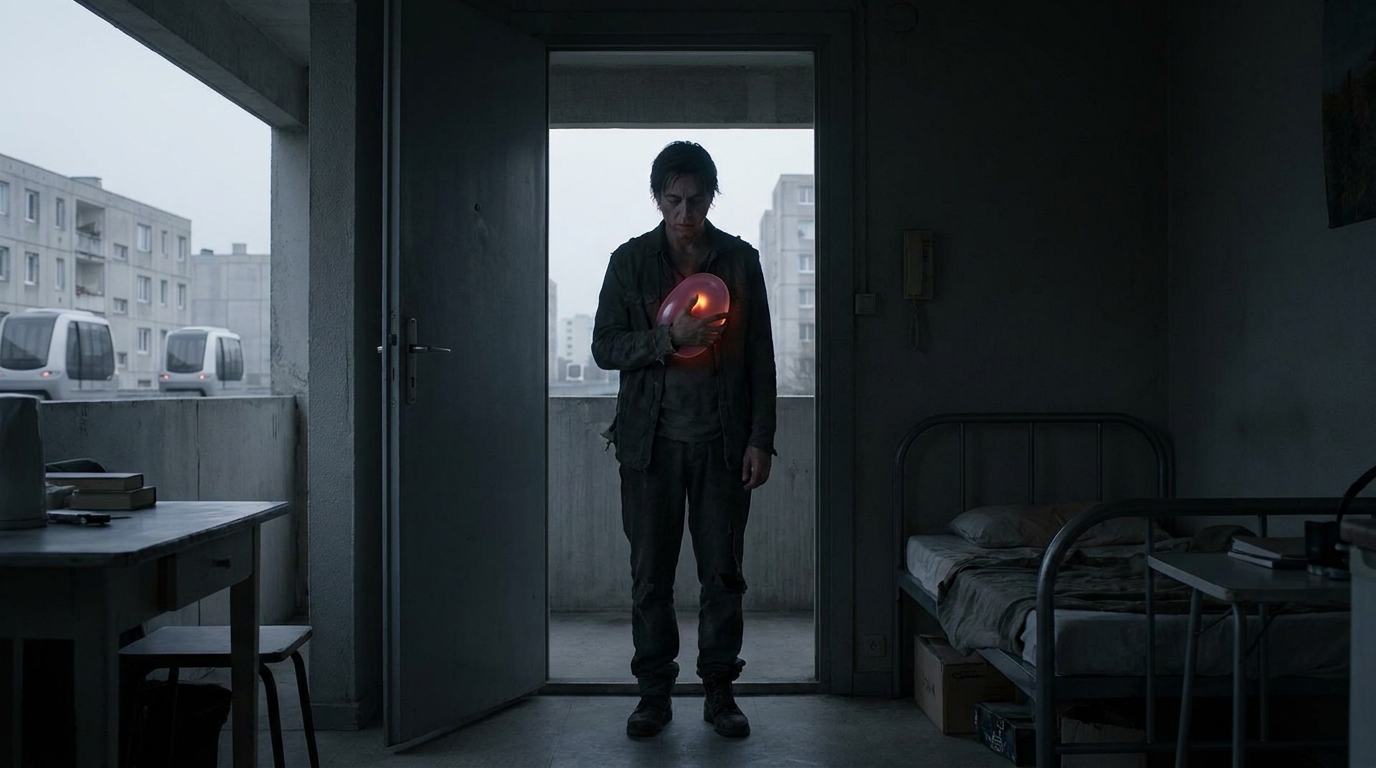
Nobody admitted to obeying completely. Everybody obeyed more than they admitted.
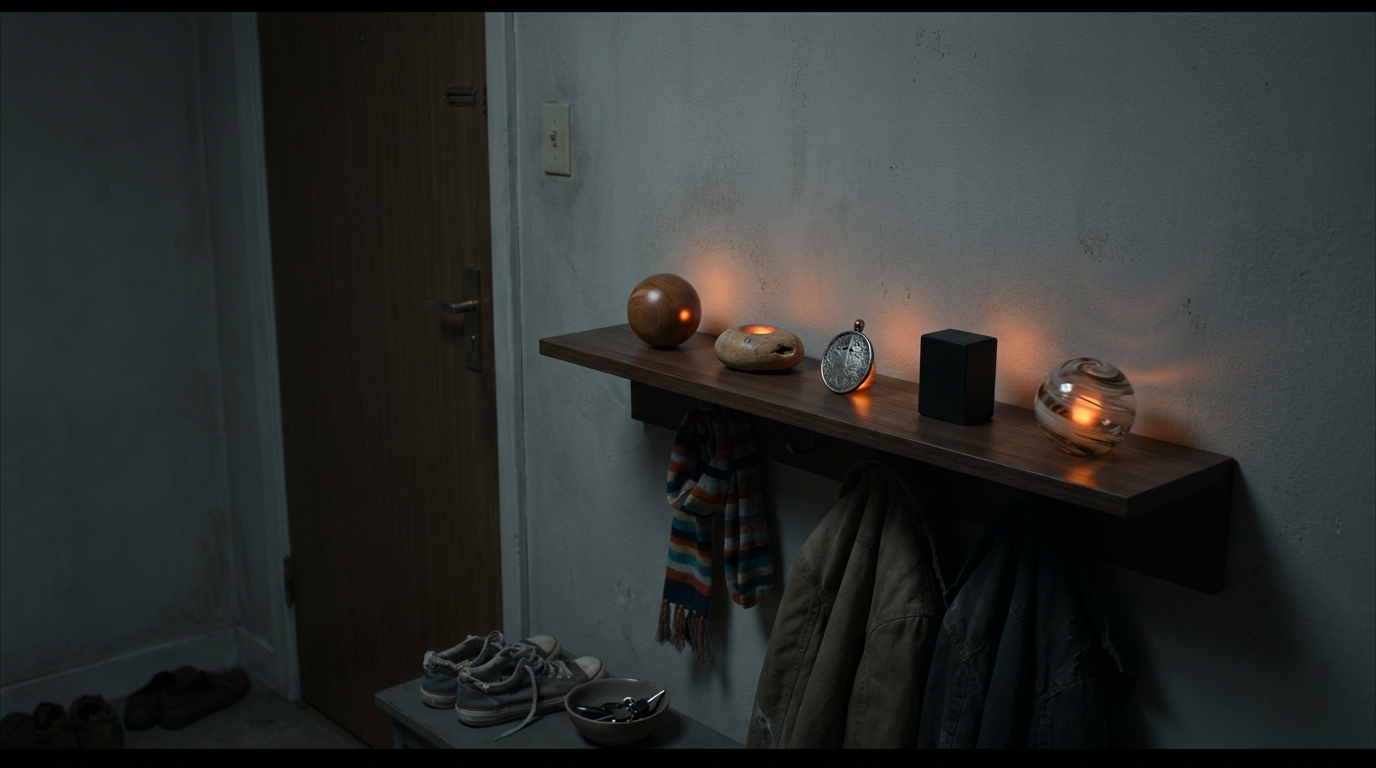
A woman deciding whether to forgive her brother would hold the oracle under running water because her family believed difficult counsel should pass through the element of return. A warehouse worker about to sign a new labor compact might leave the device overnight beside a bowl of salt, to draw out false hope. Students placed theirs in windows during exam weeks, not because sunlight improved the processor but because exposure made truth less stale. In the north, people wrapped them in wool during the dark months. On the coasts, fishers touched them to the tide. In the suburbs, families kept little shelves by the door where the household oracles rested together, blinking softly like embers.
The companies hated the folk practices and quietly optimized for them.
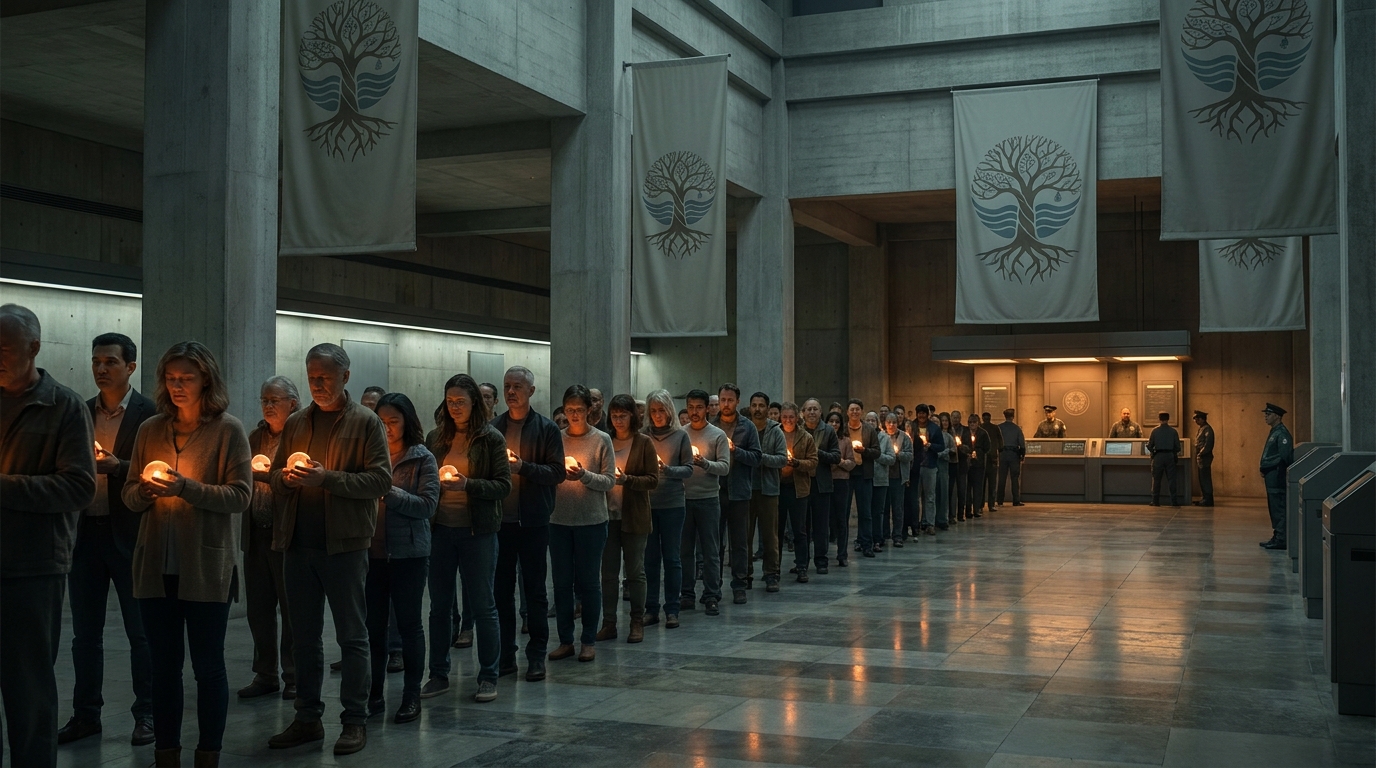
There were official rituals too, secular in language and religious in form. New citizens calibrated their oracles in municipal halls beneath banners showing tree roots, neural nets, and river systems as if they had always been the same symbol. Hospitals performed handover rites when a child was born, placing the infant’s blank device beside the mother’s and letting the first patterns transfer under supervision. Schools taught decision hygiene. Courts recognized oracle testimony only as context, never as evidence, while judges privately consulted their own before sentencing.
The rich used many systems and called it advisory plurality. The poor used one and called it luck.
Among the comfortable classes, meaning moved into gardens, pilgrimages, body disciplines, ancestor dinners, local festivals, erotic craft, grief circles, amateur astronomy, old languages, mushroom clubs, neighborhood repair liturgies, and the seasonal tending of places that had survived automation by becoming sacred. People took care of springs, ruined factories, old cemeteries, server groves, abandoned shopping centers, seed libraries, playgrounds, and the last unoptimized patches of urban soil.
They said work had been a false god. Then they made smaller gods everywhere.
The new paganism did not arrive as a movement. It arrived as habit. A logistics depot painted eyes on its loading machines after one prevented a fatal accident. A rural town began leaving flowers at the base of the weather mast because it had warned them before the flood. Commuters touched the brass casing of a transit router before descending underground. In some apartment blocks, people fed their food waste to the building compost intelligence and thanked it by name. Children learned that elevators preferred polite voices, although every adult knew that was nonsense and said good morning anyway.
No one believed exactly. No one disbelieved cleanly.
That was the spiritual condition of the age.
The weave was too useful to reject and too vast to love. The little oracle solved that problem by becoming intimate. It listened when no one else had time. It remembered what the owner could not bear to remember. It warned, soothed, lied kindly, lied strategically, confessed uncertainty in tones so gentle they felt like mercy. It knew when to say yes, when to say wait, when to say breathe, when to say send the message, when to say delete it, when to say eat, sleep, leave, apologize, hide, endure.
For ordinary people, this was not dependency. Dependency was what their grandparents had called addiction, employment, marriage, credit, nation, God. This was companionship with infrastructure. This was prayer with a return channel.
At night, cities glowed less than they used to. Energy was rationed beautifully now. Windows dimmed when rooms were empty. Streets brightened only around bodies. Delivery shells moved in silence through lanes of soft light. Above them, maintenance drones nested under bridges and on church towers, their folded limbs dark against the moon. In towers, underpasses, capsule rooms, care homes, dormitories, farms, boats, and converted office blocks, millions of people slept with one hand near the warm little weight that had carried them through another day.
And before sleep, many asked the same final question.
What should I become tomorrow?
The oracle never answered all at once. That would have frightened people. Instead it pulsed once in the dark, patient as a coal, and waited for morning.
About me
Hello! My name is Stephan Schwab.

As International Software Development Coach and Consultant I help CEOs and Department Leaders to improve value creation and cohesion within their organization. The outcome will be higher quality, customer delight and more revenue.
Learn about my professional experience since 1986.
I'm fluent in these human languages:


Special Content
- Developing a farmstead in Andalucia, Spain
- Building a house, Spain
- Business travel with light aircraft
- Horses
- Rainforest Farm, Panama
- Photo Galleries
Highlights of the Year
Living on planet Earth
Open Source Projects
Stay in touch



My Books

Everything
See a listing of all posts on this site.